Jump to:
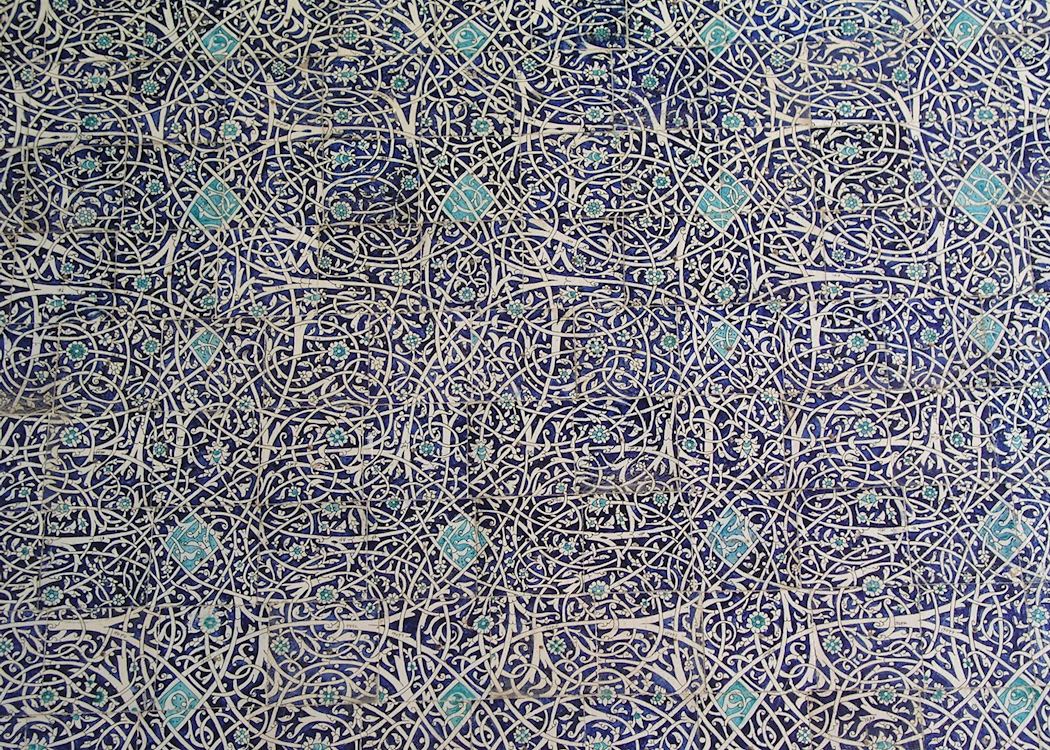
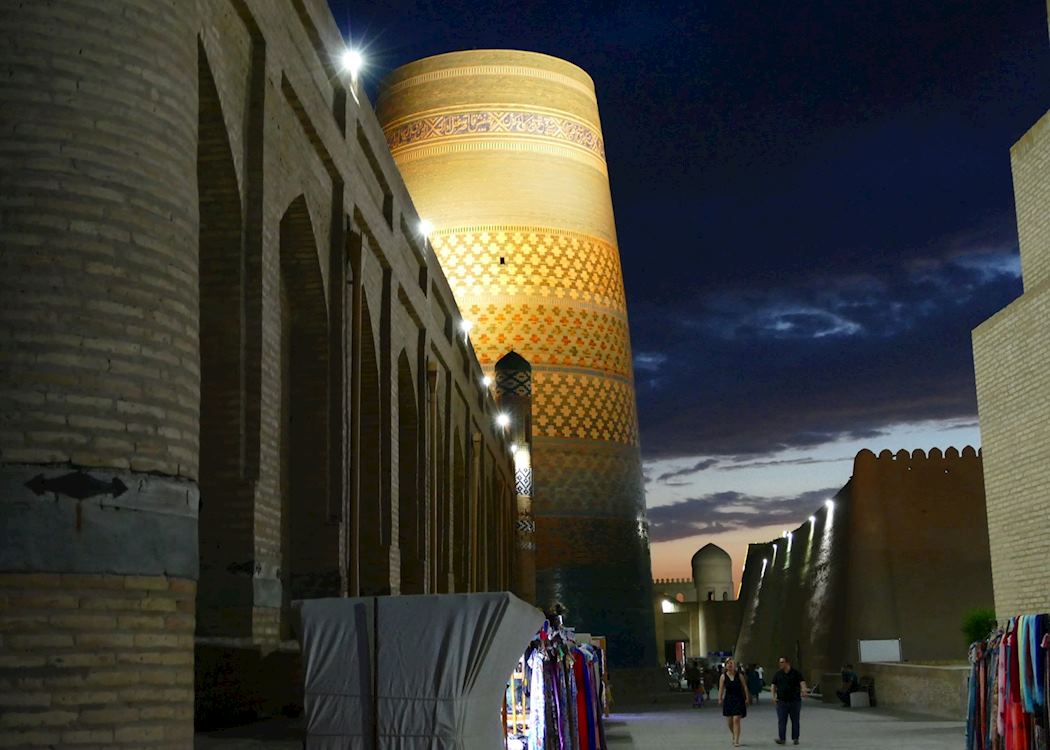
Sculpted from sand-hued stone and adorned with a mosaic of blue tiles, the timeworn city of Khiva shimmers like an azure oasis alongside the Kyzylkum Desert of western Uzbekistan. One of Central Asia’s best-preserved Silk Road cities, it’s a living museum of history and architecture.
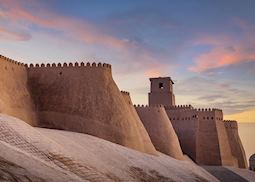
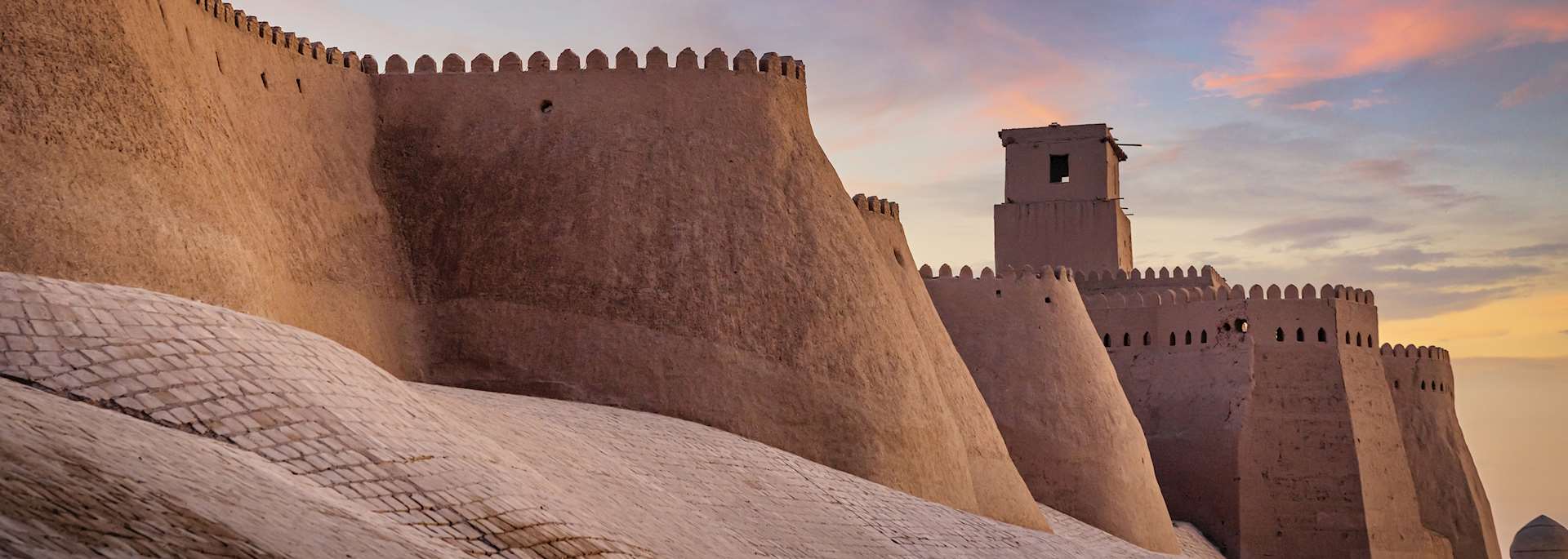
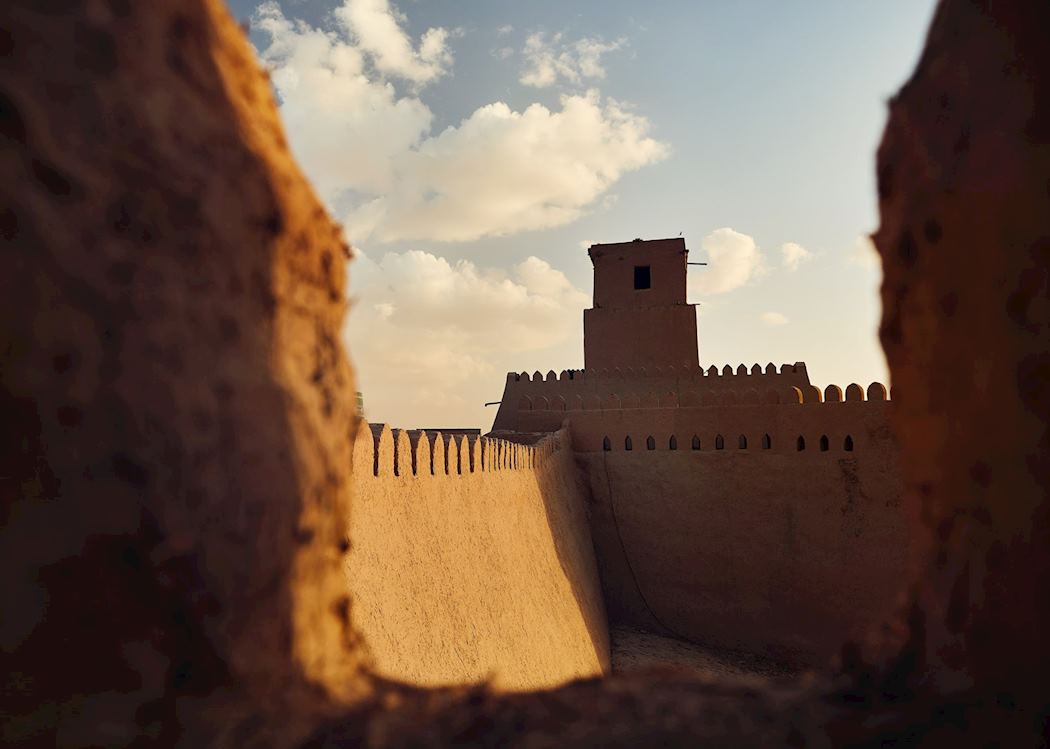
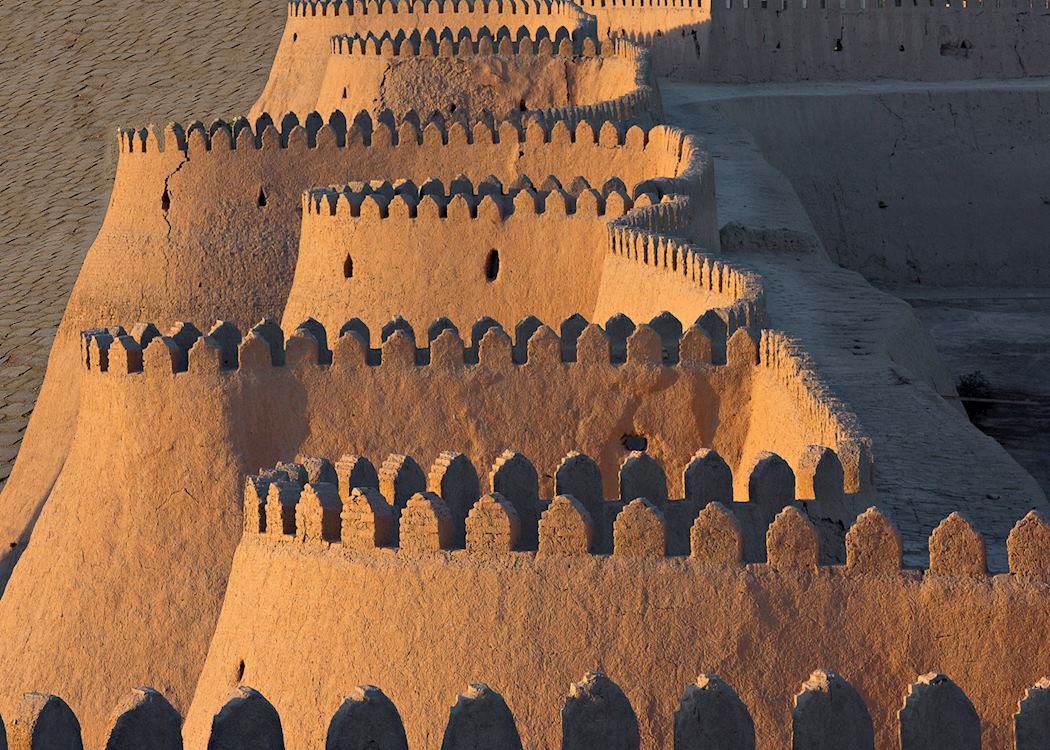
At its heart lies the UNESCO World Heritage Site of Itchan Kala, a maze of narrow alleys, majestic mosques, and soaring minarets, all enclosed by imposing mudbrick walls. As you wander through its streets, you’ll encounter the legacies of Khiva’s varied past: the flourishing Khanate period of the 16th century, the echoes of its role as a Silk Road hub, including its darker history of slave markets, and the marks left during its time as a Russian protectorate in the late 19th and early 20th centuries. Each era leaves its imprint, allowing you to step seamlessly through centuries of history.
Minarets and mosques
Compact and easily walked, Khiva is best explored on foot alongside a local, private guide who can enrich your explorations with historical and cultural insights.
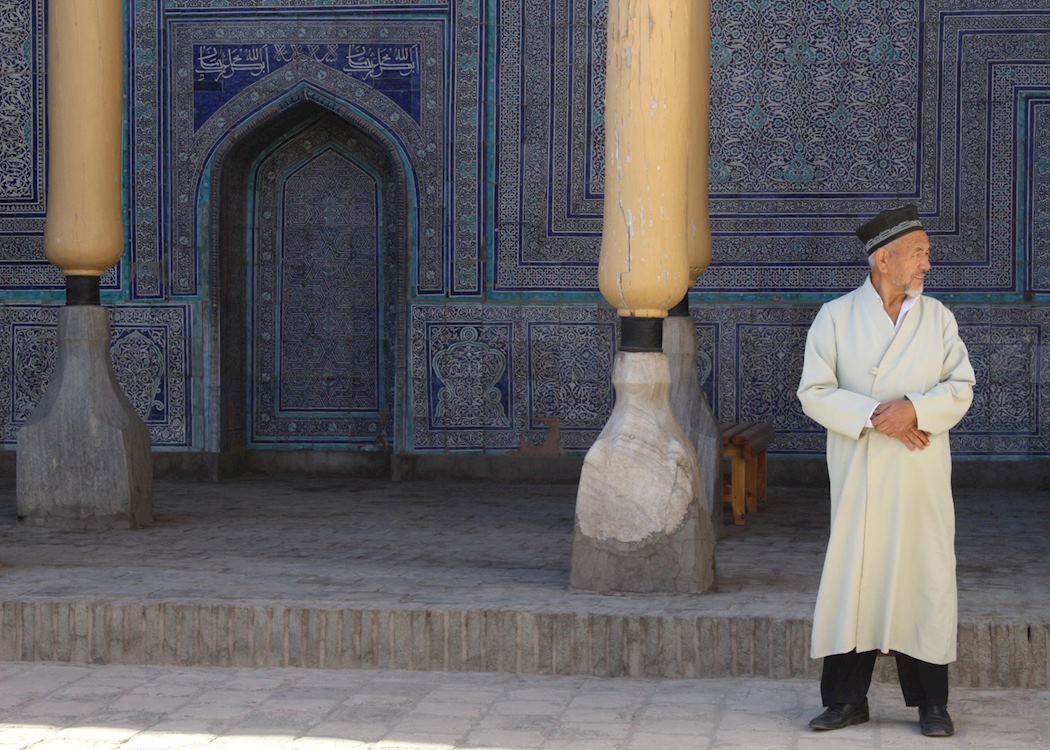
You may visit the unfinished Kalta Minor Minaret or wander the Kunya-Ark Citadel —once home to the Khiva Khans with private courtyards, mosques and throne rooms — or you could delve into the 19th-century Tosh-Hovli Palace famed for its lavish courtyards, intricate tilework and harem.
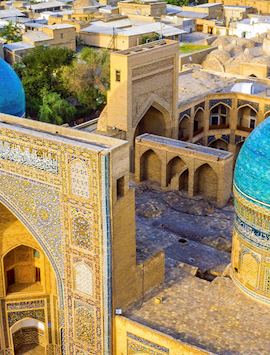
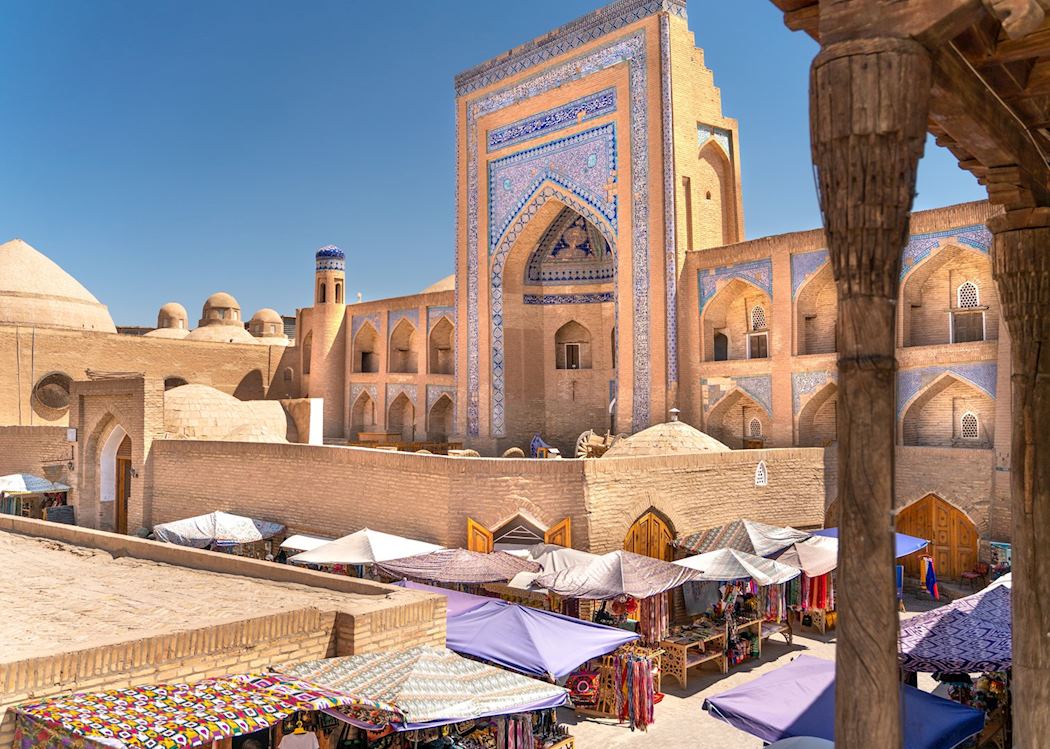
A highlight is a visit to the Mohammed Rakhim Khan Madrasa where you can climb the 118 steps to the summit of the Islam Khoja Minaret. You’ll be rewarded with sweeping views over the criss-crossing alleyways, turquoise domes, and sand-toned rooftops of the old city.
A sense of place
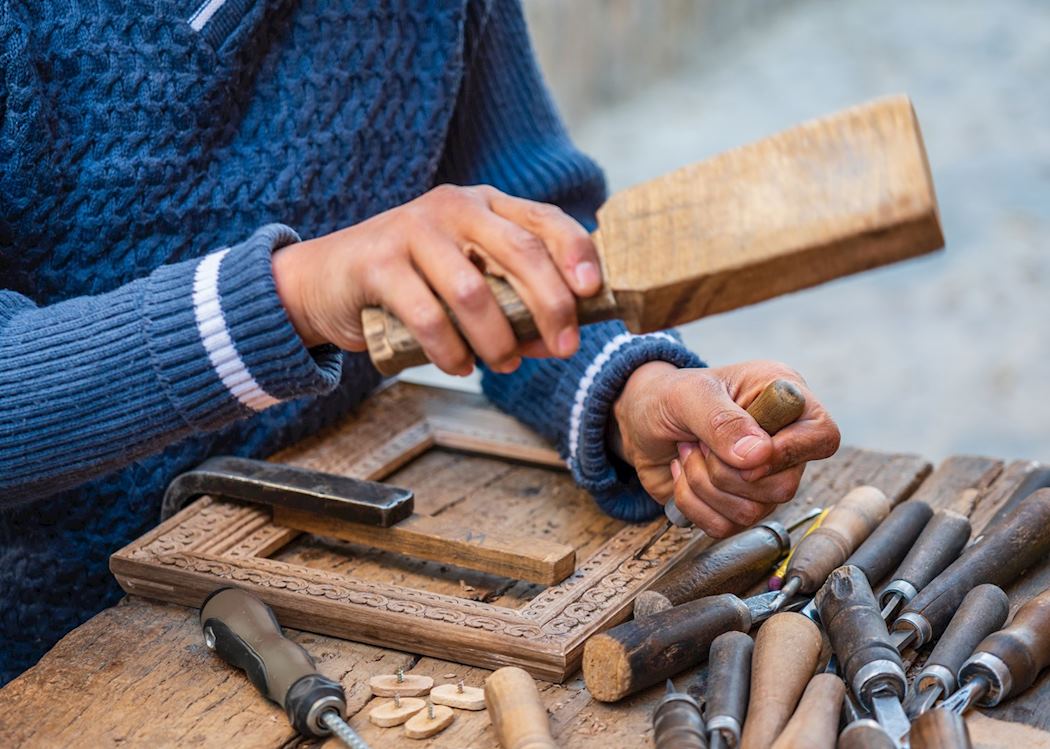
Soaking up the scents of spices, watching traditional silk and carpet weavers at work, or following the twists and turns of woodcarving artisans are a few of the rewards for spending time perusing the local bazaars and workshops of the old city, where you’d be forgiven for thinking that you’d wandered into a time capsule.
At the end of the day, watch the sunset over the desert from the top of the soaring city walls, cloaking the city in a golden light, before sampling authentic regional dishes such as plov, shashlik, or fresh non bread at a local restaurant or chaykhanas (tea house) within the Itchan Kala.
Heritage hotel stays
For a truly immersive visit, you can stay in one of the city’s former Islamic religious schools (madrasas), now converted into a boutique hotel, giving you the chance to wander the Old Town either early or late in the day, without many other visitors. As would have happened for generations here, you’ll be slowly stirred awake by the morning call to prayer echoing between the minarets.
Best time to visit Khiva
Khiva is ideal to visit in the spring (April to May) or autumn (September to October), when the weather is at its best for wandering the city. Sightseeing is difficult in winter when It gets incredibly cold, and summer when it is extremely hot.
who's been there

Start planning your tailor-made trip to Khiva by contacting one of our Uzbekistan specialists
- 617-223-4700
- Make an inquiry
Suggested itineraries featuring Khiva
Our itineraries will give you suggestions for what is possible when you travel in Khiva, and they showcase routes we know work particularly well. Treat them as inspiration, because your trip will be created uniquely by one of our specialists.
-
![Bukhara]()
-
![Song-Kul Lake, Kyrgyzstan]()
Highlights of Central Asia: Kyrgyzstan's mountains & Uzbekistan's architecture
Uzbekistan and KyrgyzstanView this tour

Places near Khiva
- Bukhara 387 kilometers away
Photos of Khiva

Accommodation choices for Khiva
We've selected a range of accommodation options for when you visit Khiva. Our choices usually come recommended for their character, facilities and service or location. Our specialists always aim to suggest properties that match your preferences.
-
![Hotel Zarafshon, Khiva]()
Zarafshon Boutique Hotel
Khiva -
![Orient Star Hotel, Uzbekistan]()
Orient Star Hotel, Khiva
Khiva
Ideas for experiencing Khiva
Our specialists seek out authentic ways to get to know the places that could feature in your trip. These activities reflect some of the experiences they've most enjoyed while visiting Khiva, and which use the best local guides.
-
Khiva walking tour ![Ancient city walls of Khiva]()
Khiva walking tour
Khiva walking tour
With a local guide, you’ll wander through Khiva’s walled old town, Itchan Kala, discovering its historic madrasas, mosques, and minarets before exploring the Ark’s palaces and vibrant bazaars, uncovering the rich history and culture of this Silk Road highlight.
View details