
By Italy specialist Jenna
I still remember my first morning in Italy: throwing open the shutters to the sound of an accordion, the view of a sun-bleached church across a cobblestone courtyard, locals greeting one another as the day began… For me, that scene captures exactly what Italy is all about — romance in the everyday.
For a first-time visit, this classic route from Venice to Rome is hard to beat in that regard. From St Mark’s Square to the Colosseum, you’ll experience the must-see sights, as well as embrace what lies just beyond them. Moving between city and countryside, each stop adds a new layer to Italy’s story, from intimate moments like a private Chianti tasting in Tuscany to joining the lively scene beneath Florence’s Duomo.
Seeing Venice as the Venetians do
From the whisper-quiet back canals to the vast, shallow lagoon, the true spirit of Venice is found on the water — and there’s no better place to begin a visit to the city. I like to start with a private tour by water taxi, where you can take in landmarks like the Grand Canal, before slipping into the more unvarnished districts for an intimate view of Venetian life.
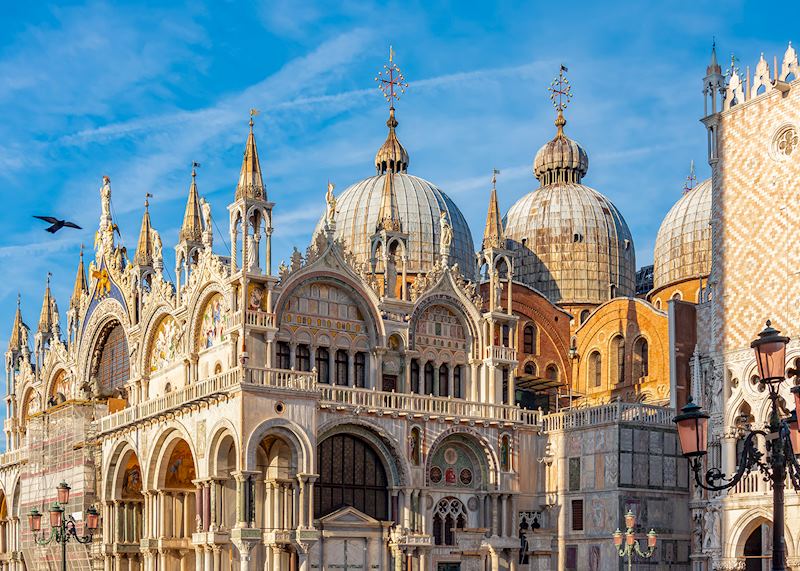
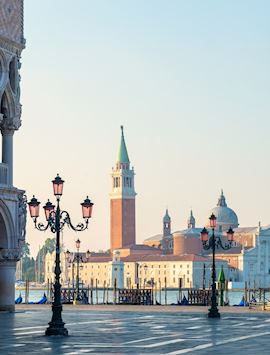
From there, I recommend taking time to plunder the depths of the city’s history at St Mark’s Square. With an expert guide, you can trace the threads of the Republic of Venice, a global hub of religion and trade for over a thousand years.
You’ll start with the glimmering gold mosaics and Byzantine domes of St Mark’s Basilica, the final resting place of Saint Mark’s relics, which you’ll have fast-track access to. Then, explore the Doge's Palace, the former seat of the republic, extravagantly decorated with gilded stuccowork. Here, legendary libertine Casanova was once confined, and you’ll cross the narrow, barely lit Bridge of Sighs, just as he did on the way to his windowless cell.
I’d also encourage you to spend a day on the islands of Murano and Burano, which you can access by vaporetto (water bus). The islands preserve two of Venice's most important trades, glassblowing (Murano) and lacemaking (Burano), and on a guided visit, you can watch artisans at work in their ateliers.
Finally, I’d be remiss not to mention Venice’s food scene. The best bàcari (traditional bars) are sequestered down the unassuming back canals, where you’ll find locals enjoying cicchetti (Venetian tapas) and Select spritzes (Venice’s answer to Aperol). A food tour can help you get a sense of where some of these hotspots are hiding.
Insider’s tip: Don’t pre-arrange your gondola ride. The experience is at its most romantic when the mood strikes.
Living the Renaissance in Florence
The beating heart of the Renaissance, Florence is a city that pushes the boundaries of the imagination. To get a true sense of its artistic and architectural power — from its marble-lined piazzas to its dome-spanning frescoes — I’d suggest beginning with a guided highlights tour.
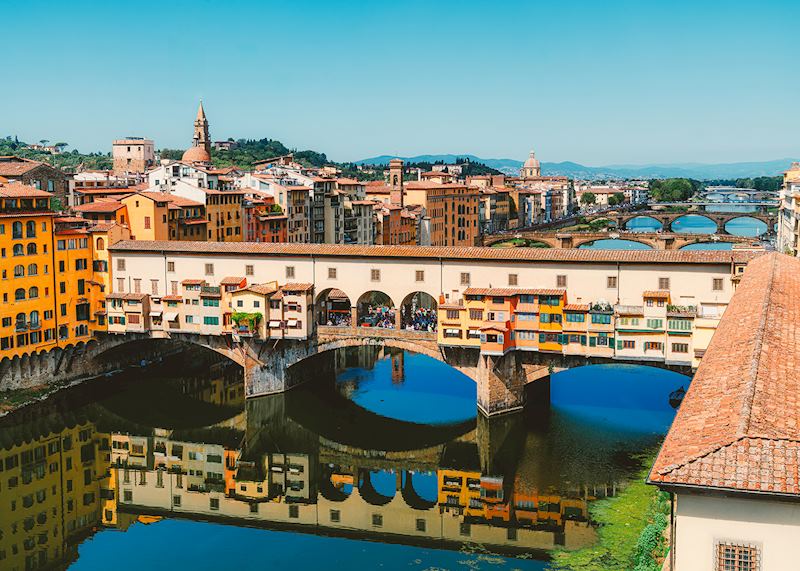
Along the way, you’ll cross the Ponte Vecchio bridge, with its cluster of centuries-old goldsmiths huddled shoulder to shoulder. You’ll also pause in the city’s main square, Piazza della Signoria, which is presided over by the fortress-like Palazzo Vecchio (former home of the Medici dynasty). What really stays with you, though, are the details your guide points out as you walk, like the medieval tower houses and the tiny wine windows, which will give you a taste of what you might want to explore later on your own.
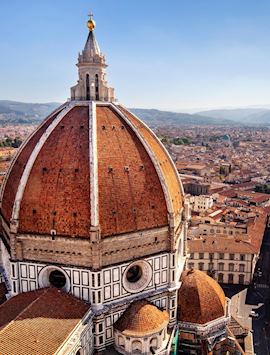
Dominating the Florentine skyline, Il Duomo (or Cattedrale di Santa Maria del Fiore) is another must-see stop. On the highlights tour, you can admire its vast, burnt-orange cupola from the piazza, and we can also arrange for you to delve further into the wider complex, either independently or alongside an expert. (If you’re up for a 463-step climb, head into the dome to admire Vasari’s The Last Judgement, a tumultuous carousel of angels and demons painted on fresco.)
Even if galleries aren’t your usual thing, it’s also worth making time for the masterpieces at the Uffizi and the Accademia. A guided tour can give you fast-track entrance to the museums, as well as an in-depth look at Florence’s defining artworks, from Michelangelo’s David to Botticelli’s The Birth of Venus and Caravaggio’s Medusa.
After all that walking, you can’t beat a lampredotto (juicy, slow-cooked tripe on a crusty roll), which you can sample, along with other hearty dishes, on a Florentine food tour.
Insider’s tip: Florence is small and easily walkable. While you’re there, meander up to Piazzale Michelangelo for sunset and experience the magnitude of the city’s vista at golden hour.
La dolce vita in Tuscany
Among the gentle rise and fall of Tuscany’s hills, you’ll encounter a stillness near impossible to find in Italy’s cities. This is the place to unabashedly indulge in “la dolce far niente”, the sweetness of doing nothing.
I like to base myself in the vineyards of Chianti — at somewhere like Badia a Coltibuono, a thousand-year-old monastery-turned-wine-estate. Surrounded by olive groves, you can truly slow down the pace: wandering between wine cellars, strolling through private woodlands, and bathing in a pool that looks across a vine-covered valley.
Of course, the region’s signature experience is wine tasting, which you can do on site or at the many other family-run vineyards in the region. There’s not just classic, cherry-rich Chianti on the menu either, but bright Tuscan sparkling and sweet dessert wines with notes of honey and almond.
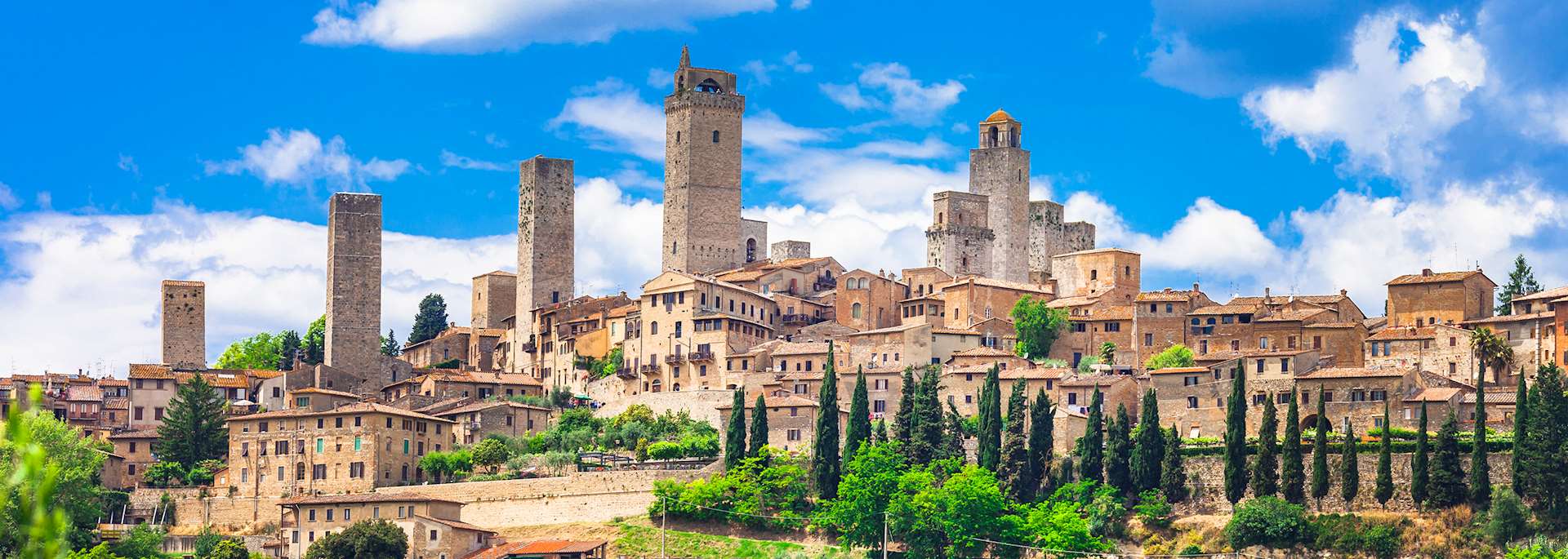
Outside the wine estates, I’d recommend taking a look at Chianti’s medieval townships. On a private tour, you’ll be taken through the intricacies of Siena’s Gothic lanes and the 700-year-old “skyscrapers” of San Gimignano, before stopping for lunch at a traditional farmhouse.
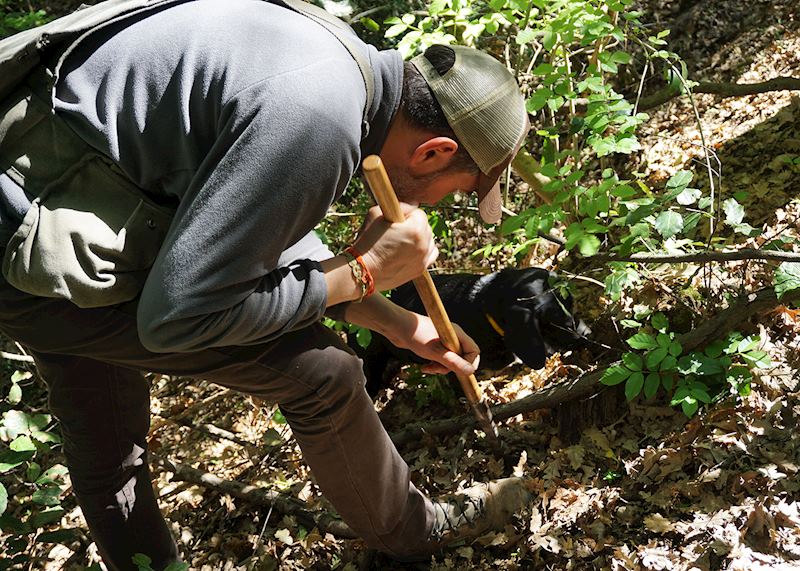
Nearby, you can also try truffle hunting with a local expert and their highly trained sniffer dog. This centuries-old craft is still woven into the Tuscan culture and economy, and you’ll see it brought to life with a tasting of truffle-based dishes at the end of the experience.
Insider’s tip: Find a safe spot in the hills above San Gimignano and see how its medieval towers rise from the landscape — almost as if growing out of the slopes below.
The roads less — and more — traveled in Rome
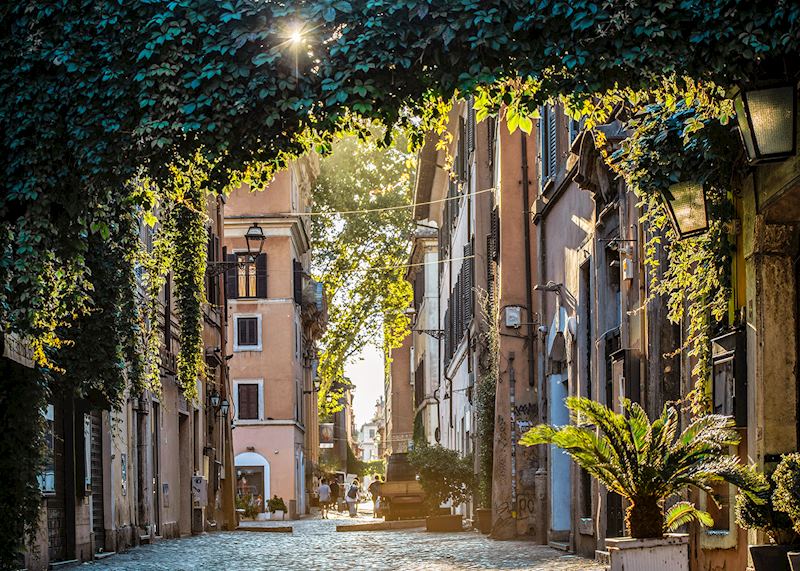
Rome is the city that made me fall in love with Italy. Art, history, culture — all of that is at an apex here, with ancient ruins slotting neatly between Renaissance palazzi and modernist museums. With so much layered into the city, it can feel daunting at first, but alongside an expert, its complex past becomes far easier to navigate (especially as all our guides have advanced degrees in their subjects).
Then there’s just the question of how you want to explore. A Vespa tour sees you zipping through Rome’s streets, old and new, while getting around by Ape Calessino (a tuk tuk style vehicle) allows more time for conversation en route. A classic Rome walking tour slows things down further, but with a car on hand to transport you easily between districts. Whichever you choose, we can make sure the big hitters are covered: the Colosseum, Roman Forum, Spanish Steps, and Trevi Fountain.
As the Vatican is so monumental, I also find that a guided tour of the Sistine Chapel and St Peter’s Basilica helps bring the scale and significance of these spaces into context. Just as important, though, is venturing out on your own into Rome’s more local neighborhoods. I’m a fan of bohemian Trastevere, with its cobbled streets and easy-going nightlife.
Food is another pillar of Rome’s cultural identity, and it’s the birthplace of many quintessential Italian dishes. You’ll want to try the city’s four classic pasta dishes — carbonara, cacio e pepe, amatriciana, and gricia — while supplì (rice balls filled with mozzarella) are the must have street food. I also suggest taking a guided walk through Campo de’ Fiori and the Jewish Ghetto, which is one of the best ways to see how Rome’s history has shaped its cuisine.
Insider’s tip: Don’t be afraid to get lost. For me, Rome is at its most special in those backstreets that you stumble across by chance.
Is it easy to get around Italy?
Yes, getting around Italy is relatively straightforward. High speed trains connect the major cities, and, for the most part, we can book these tickets in advance for you. Where trains aren’t the best fit, we can also arrange private drivers or self-driving for longer journeys.
How much time should I spend in Italy?
Ten to fourteen days is the sweet spot for exploring Italy. It’s enough time to experience the highlights and more, without feeling worn out — very much in the spirit of “la dolce vita”. Of course, if you want to explore further, such as cruising the Adriatic or taking a road trip across Sardinia, we can also create a longer trip shaped around you.
When should I go to Italy?
I often recommend April and May, or September and October, for their milder weather and lighter crowds. However, Italy is a year round destination, and the best time to visit ultimately depends on personal preference. If you’re planning to cruise the Italian Riviera, summer’s sparkling blue seas and warmth are hard to beat, while the cool days of winter bring a quieter calm to the cities.
Read more about trips to Italy
Start thinking about your experience. These itineraries are simply suggestions for how you could enjoy some of the same experiences as our specialists. They're just for inspiration, because your trip will be created around your particular tastes.
View All Tours in ItalyPlan your trip
Tell us about your plans and one of our specialists will plan a unique trip for you...
Make an inquiryRequest our brochure, The World Your Way

Order your digital copy via email.
Request a brochure