
By Spain specialist Claire
I like to think of Spain as a giant tapas platter — each region has its own character, cultural quirks, and historical influences. You’ll see this reflected in their cuisines, art, architecture, and people.
That’s why, as a first-time visitor to Spain, you won’t want to stay in one place. For a full picture of the country, I suggest following a route that takes in several of its cities, exploring each one with private guides who’ll show you both well-known and hidden highlights. From elaborate royal palaces and dizzying cathedrals to zany artwork and emotive flamenco dancing, there’s far more to Spain than sun, sea, and sand.
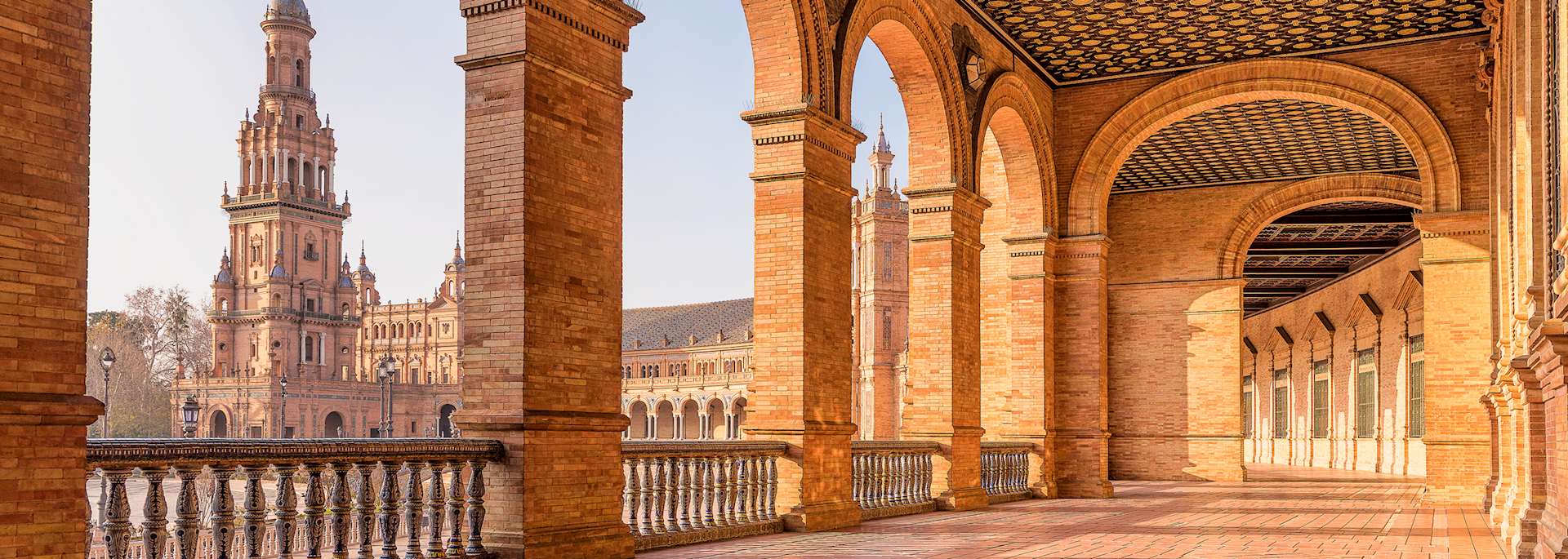
Home-cooking classes & Moorish influences in Seville
I love Seville for its character — walking around its mesh of cobbled lanes, it feels like you could be in Morocco’s medinas. Cathedrals and mosques sit side by side as they have for centuries. And, in the streets, buskers break into impromptu flamenco performances, first brought to the city by its Roma community.
What also won my heart here was the food — I’ve had some of my best tapas in Seville’s low-key bars. To really immerse yourself in the cuisine, though, I recommend a private cooking class with a professional chef.
You’ll pick from an extensive menu, perhaps starting with pisto manchego (ratatouille made of fried green pepper and tomatoes) or gambas al ajillo, (garlicky shrimps) before learning how to make paella or tortilla de patatas (Spanish omelette). As you cook, your chef will tell you about each dish’s origin and significance in Spanish culture. You’ll then tuck into your creations over a glass of wine on the rooftop.
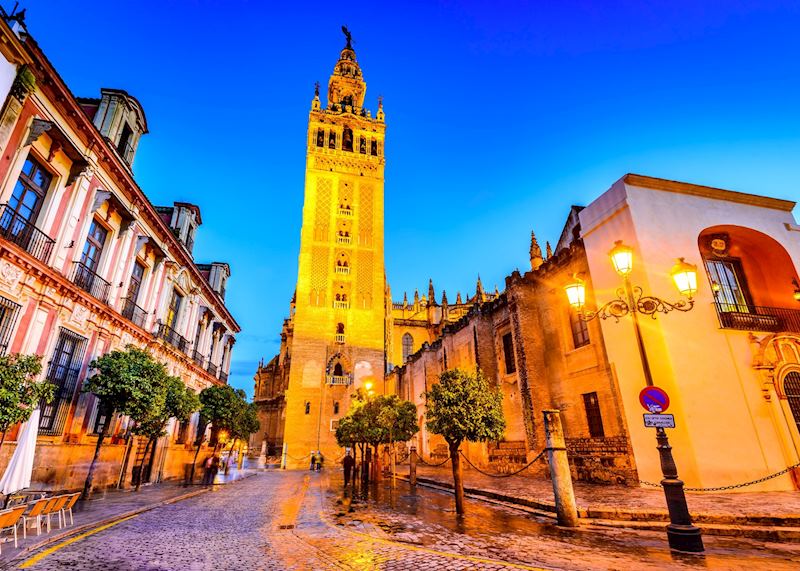
Because it’s your first time in Seville, I suggest exploring the city’s highlights on a walking tour. With your private guide, you’ll visit the Real Alcázar (Royal Palace) with its ornate tiles and intricate stucco work, as well as the 16th-century Catedral de Santa María de la Sede, whose architecture blends Moorish and Gothic styles. And, you’ll stroll through Santa Cruz — the labyrinthine old Jewish quarter where buildings either side of you are almost touching.
Insider’s tip: Explore some of Seville’s markets — whether you’re looking for great-value locally made souvenirs or the best tapas bars.
Madrid’s royal palaces & art collections
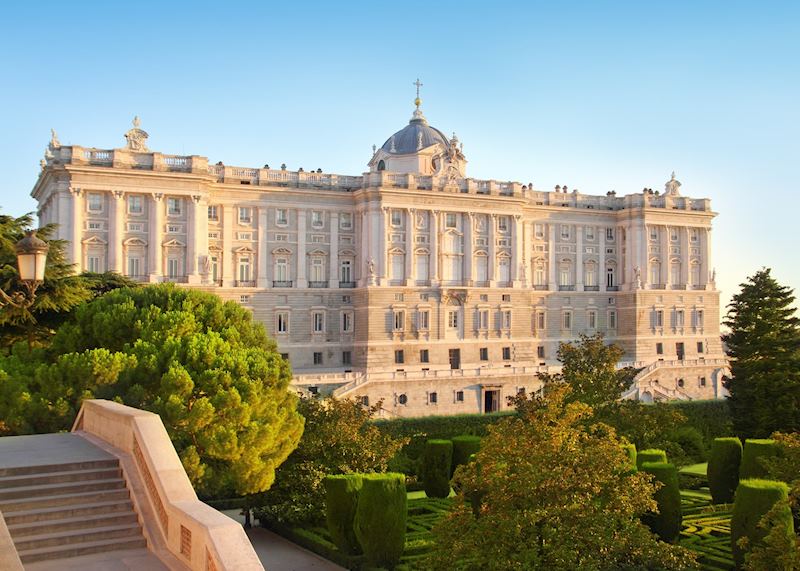
Madrid brims with art, history, and grand architecture — and there’s no better way to see these than on a guided highlights tour. Both on foot and by car, you’ll take in key sights and monuments, but the standout for me is the Palacio Real (Royal Palace). Almost double the size of Versailles, the 18th-century palace sits on the former site of a 9th-century Moorish castle.
It goes without saying that there won’t be time to explore all 3,418 rooms, but you might look in the Throne Room with its gilded furniture, and Carlos (Charles) III’s bedroom, decked out in luxe mahogany. Plus, everywhere you look are priceless art pieces passed down through generations, from porcelain to watches. Don’t miss strolling the grounds with their perfectly clipped topiaries and fountains.
Your guide will also lead you around the Museo del Prado, part of Madrid’s “golden triangle” of museums, and a neoclassical building bursting with artworks that paint a picture of Spain’s past. Here, you’ll find vast numbers of paintings by the most beloved artists of the Spanish monarchs — in particular, works by El Greco, Goya, and Rubens.
Insider’s tip: I’ll make sure you have a Madrid Art Pass. It grants you access to all the “golden triangle” art museums throughout your stay without having to wait in line at each venue.
Barcelona by bike & discovering Gaudí’s work
Barcelona’s personality shines through in its eclectic architecture, tree-lined boulevards, and lively waterfront. On your first trip to the city, I suggest exploring on a guided cycling or e-bike tour.
Your private guide can plot a route based on what you most want to see, whether it’s the beachfront, the leafy parks, or art hotspots. They’ll show you how the city used to look in decades past, share anecdotes and local insights, plus you’ll get to taste some traditional tapas as you go.
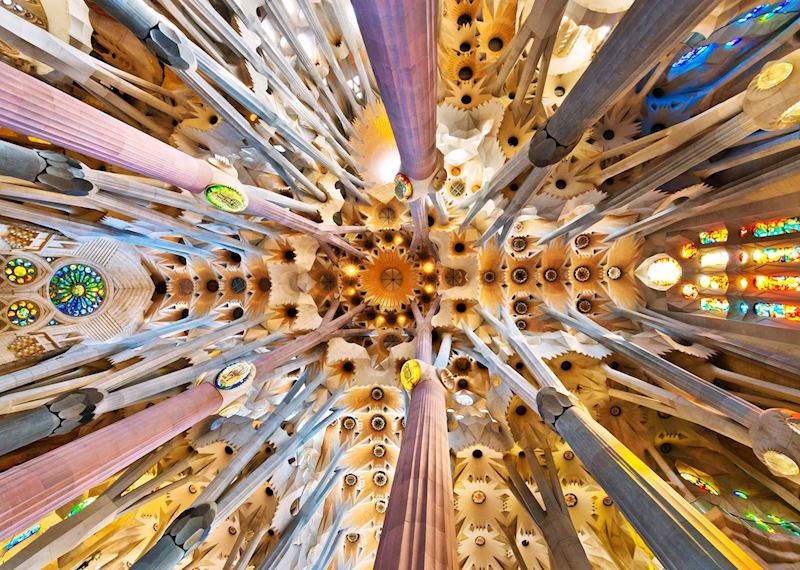
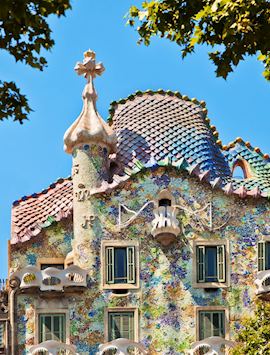
We can also arrange for a driver-guide to take you to each of Gaudí’s best-loved creations, including the distinctive Casa Milà apartment blocks (often called “La Pedrera”), the mosaic-clad Park Güell, and the Sagrada Família, whose unmistakable figure has dominated the skyline throughout its 130-year construction. You’ll hear about the inspiration behind the artist’s works, and see the impact he’s had on the city as a whole.
Insider's tip: Take the gondola from the seafront to the Estadi Olímpic, which hosted the 1994 Olympics — you get great views over the city, and there’s an excellent paella restaurant, Terrassa Martínez, close by.
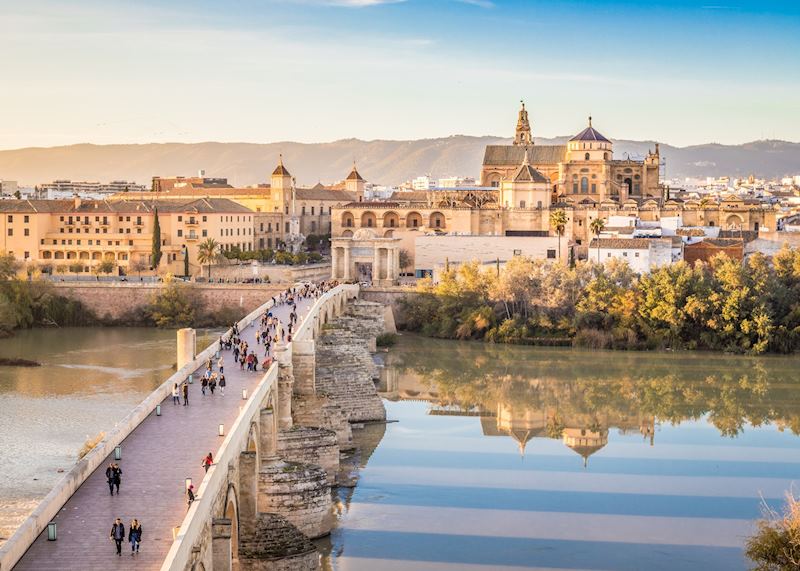
Exploring Córdoba’s mosque-cathedral & plant-filled patios
Once the capital of Spain, Córdoba’s former significance is still evident in its grand palaces, observatories, and old university buildings (this was also the intellectual hub of the Umayyad dynasty).
Without doubt, the best way to appreciate this UNESCO World Heritage city is on a privately guided walking tour. Your guide will shed light on Córdoba’s past and its Moorish, Christian, and Jewish roots. You’ll explore the narrow, winding streets of the Jewish quarter, including a visit to the 14th-century Córdoba Synagogue, and take in the Alcázar de los Reyes Cristianos (Fortress of the Christian Kings) — the Moorish gardens here really wowed me with their vivid flowers, series of pools, and orderly rows of trees.
The headline act, though, is the Mezquita, a sprawling mosque complex that was later modified to include Christian chapels and a Renaissance cathedral within its original 8th-century structure. It’s best known for its 856 pillars, which create a forest of striped arches, gradually becoming more elaborate as you draw closer to the maksura — where the caliphs would’ve prayed. I found having a guide here so beneficial for interpreting the symbolism and background of each architectural era.
Insider’s tip: If you’re visiting in May, Córdoba hosts a floral competition among its private courtyards, which locals take very seriously. Many of them temporarily open to the public (indicated with signs) and are well worth visiting.
Absorbing Granada’s Alhambra & flamenco dancing in a cave
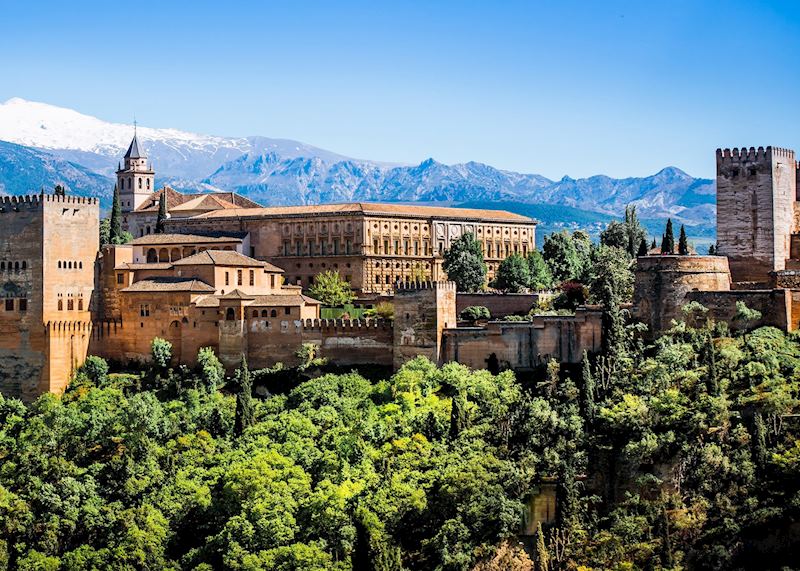
I’d say Granada has one of the finest backdrops of any Spanish city, with the Sierra Nevada mountain range rising behind its terracotta-roof buildings and the sandy-toned walls of the Alhambra. It was here that the Muslim Nasrid dynasty ruled, its influence still echoed in the narrow lanes and Arab bathhouses.
It would be remiss not to visit the Alhambra’s fortified palaces while in Granada. Built in the 14th century across three hills overlooking the city, they’ve retained an imposing presence that immediately drew me in.
I highly recommend exploring with a private guide with specialist knowledge of the palace (plus, you get fast-track entry). They’ll be able to show you the parts that most interest you in more detail and tell you about its construction and former inhabitants.
Granada is also renowned for its flamenco, and while you’ll likely encounter street dancers as you wander, I suggest experiencing an authentic live performance one evening in the cave community of Sacromonte.
I can arrange for you to head up into the hills where the Roma settled after the fall of the Moorish empire in the 16th century, creating homes in the caves. It’s in one of these caves that you’ll watch a traditional flamenco performance, complete with dinner and a drink. Guests encircle the dancers during the show, so you’re close enough to feel the waft of their fans — you might even feel compelled to take part in an informal rumba at the end of the show.
Insider’s tip: Watch the sunset from El Huerto de Juan Ranas, a hilltop restaurant with incredible views of the Alhambra and nearby mountains. Take a taxi though — it’s a steep walk.
Is it easy to get around Spain?
Yes, the trains in Spain are great for connecting cities, and we can arrange tickets for you in advance. We can also arrange for private drivers to take you from place to place. Or, in northern Spain, especially, self-driving is a good alternative — we’ll match you with the right vehicle for your needs and provide detailed directions for each journey.
How much time do you recommend spending in Spain?
Ten days would give you enough time to visit each of the cities I’ve mentioned in this guide, though two weeks would allow for a more relaxed pace. Of course, we can create a longer trip if you want to explore more regions or stay in each place longer for a more in-depth experience.
When do you recommend visiting Spain?
May or September are my preferred months to visit Spain, as the temperatures are warm but not too hot, and there are fewer crowds than in summer. October or November are also good options if you don’t mind there being a chill in the air.
Start planning your trip to Spain
Start thinking about your experience. These itineraries are simply suggestions for how you could enjoy some of the same experiences as our specialists. They're just for inspiration, because your trip will be created around your particular tastes.
View All Tours in SpainPlan your trip
Tell us about your plans and one of our specialists will plan a unique trip for you...
Make an inquiryRequest our brochure, The World Your Way

Order your digital copy via email.
Request a brochure