By Africa safari specialist Sarah
If I could go on safari for the first time again, I’d pick Tanzania — the north, specifically. You’d be hard-pressed to encounter as many species and landscapes in just a few days as you can here. You’ve got multiple opportunities to spot the Big Five, a chance to witness the largest mammal migration on Earth, and the ability to go from mountain backdrops to a soda lake and a volcano crater to wide-open plains in less than a week.
This classic route through northern Tanzania is tricky to top. It starts in the shadow of Kilimanjaro, before descending into one of the world’s largest calderas, filled with wildlife, and then ends in the storied savannas of the Serengeti. Though I’d add one thing to make it even better: a relaxing finale on Zanzibar’s white-sand shores.
Mountain scenery & Maasai culture near Arusha
The adrenaline of a first-time safari is powerful. That moment when you lay eyes on a lion emerging from the grass mid-chase, or appreciate just how powerful elephants are as you see one ripping branches from an acacia… It can be all-consuming. So, I like to give myself a day or two to recharge after a long flight, before the action begins.
The area around Arusha makes for a good base. It’s only a 90-minute drive from Kilimanjaro International Airport, where you’ll fly into, and stopping here breaks up the long journey to your first safari destination. As the airport’s name suggests, you might catch a glimpse of Africa’s tallest mountain on the ride to your hotel. Then, once you reach Arusha, Mount Meru's conical form comes into view.
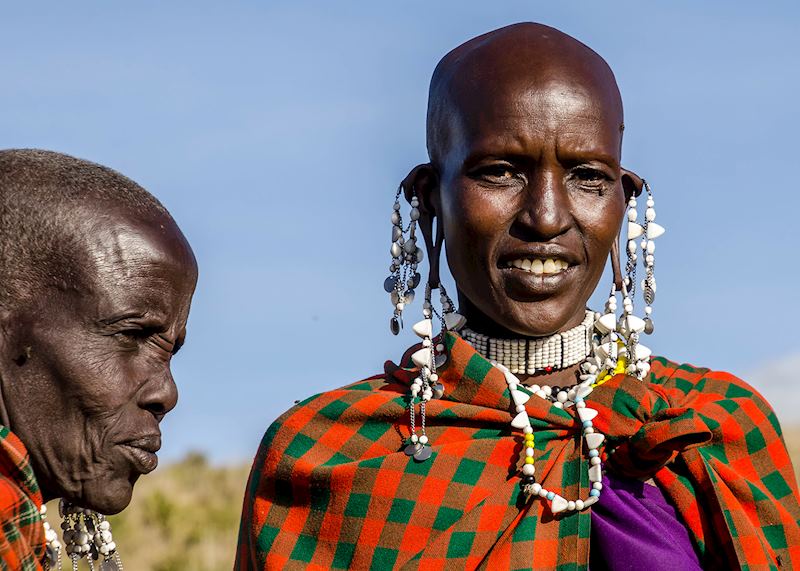
During your stay, take a stroll through the town, where red-garbed Maasai men herd cattle and market stalls are piled high with bananas. You can also pick up souvenirs at the artisan markets, which sell an array of crafts, from Makonde sculptures to bright batik fabrics. Alternatively, you could head out to one of the region’s hundreds of coffee plantations for a guided bean-to-cup tour, or kick-start your wildlife-spotting with a canoe ride on Lake Duluti, looking out for monitor lizards, kingfishers, and fish eagles.
Insider’s tip: If you’d like to connect with Maasai culture more deeply (and get the best views of Kilimanjaro), stay at Africa Amini Maasai Lodge, a couple of hours north of Arusha. During the day, you might join a traditional healer on a medicine walk into the foothills or create beaded bracelets under the guidance of artisans. Then, after an evening of stories around the campfire, you’ll retreat to your mud-wall roundhouse.
Spotting the Big Five in Ngorongoro Conservation Area
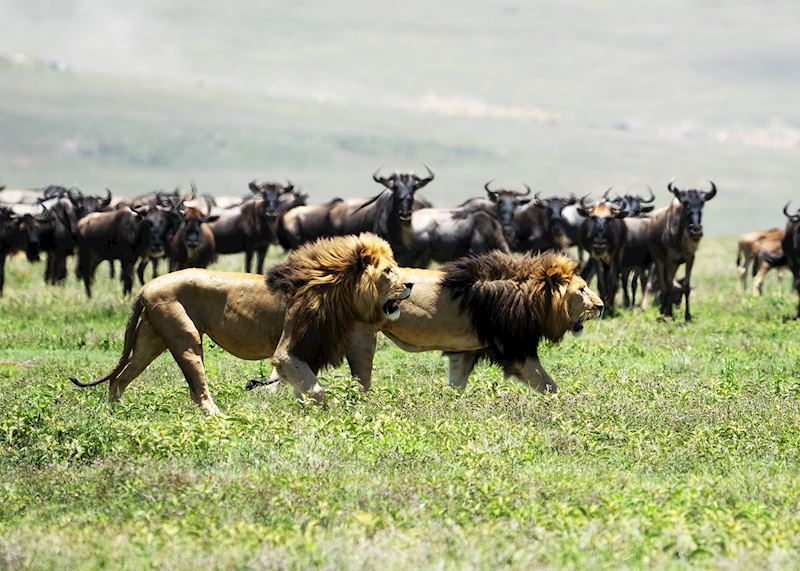
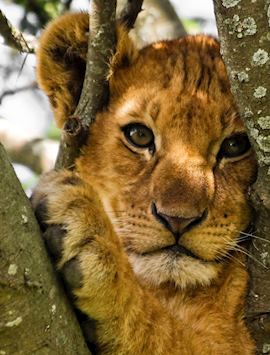
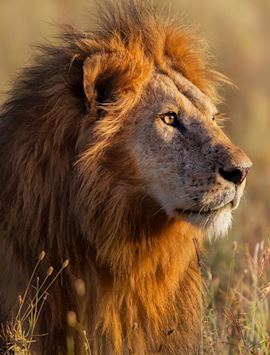
Lions, leopards, rhinos, elephants, and buffaloes — the Big Five understandably feature on most first-time safari wish lists. All five species roam the Ngorongoro Crater, a huge volcanic caldera formed over two million years ago. Its steep banks naturally corral some of the continent’s densest populations of large mammals, which thrive on the fertile grasslands.
On a guided 4x4 drive, you’ll start at the top of the rim to take in the crater’s magnitude, watching tiny animals moving below, before making the 30-minute descent into its bowl. I’d only reached the bottom five minutes prior when my guide pointed out a pride of lions basking in the morning sun. Then we passed a herd of elephants and a few shy black rhinos sheltering in the forest, before watching a flood of flamingoes clustering on the waters of Lake Magadi.
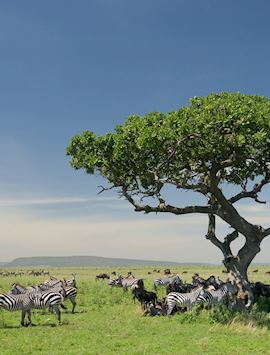
As for what else you might see: zebras, wildebeests, gazelles, hyenas, hippos… the list goes on. Not giraffes, though. It’s thought that their gangly bodies struggle to get down — plus there are few tall trees on the crater floor to tempt them. (You can spot them at the top, though.)
Insider’s tip: Ngorongoro’s geology makes it a confined area, and that means it can get busy with vehicles. But you can skirt around the most crowded times with early-morning starts. I suggest staying at Lion’s Paw Ngorongoro. This tented camp is just a ten-minute drive from the crater, so you can be among the first people to reach its floor.
The Great Migration & beyond in Serengeti National Park
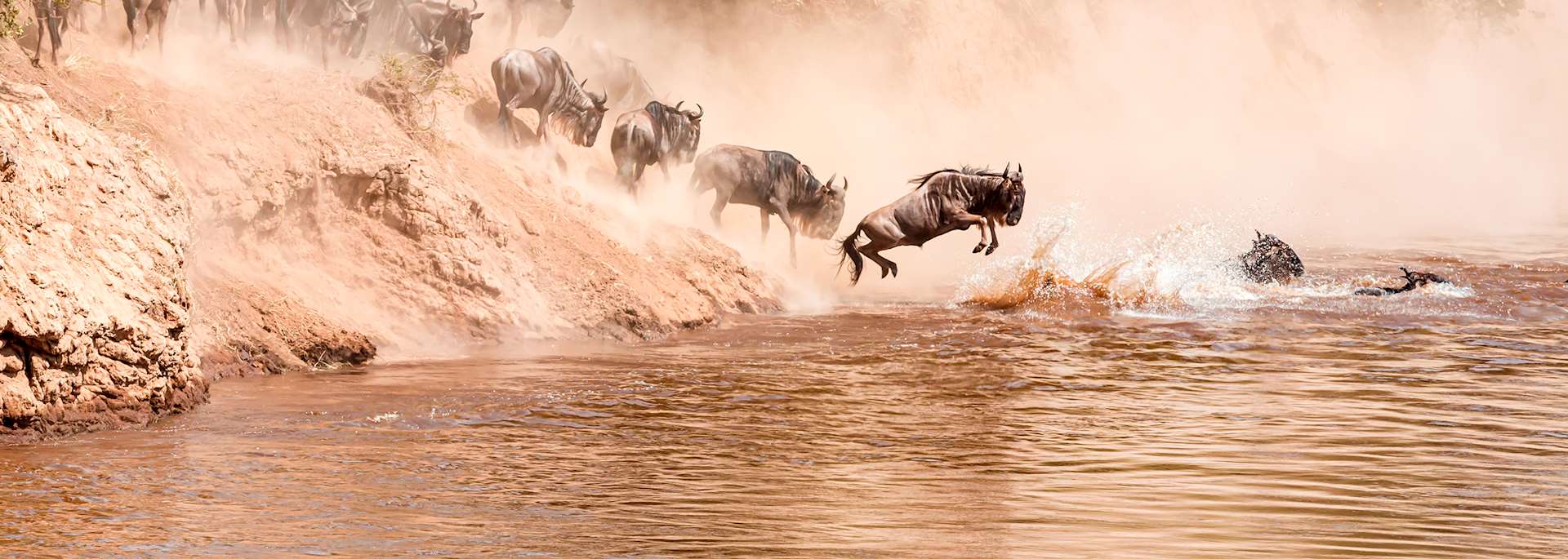
When you think of the Great Migration, your mind might go straight to river crossings, where huge herds of wildebeests plunge into crocodile-infested waters. I can attest that the drama it creates is the stuff of documentaries, but the spectacle draws a huge crowd, with dozens of vehicles lining the banks at the first sniff of a crossing. Luckily, the migration is much more than that moment alone — it’s a year-round event. In fact, I think it’s worth avoiding river-crossing season (July to September) for a more authentic safari experience.
I particularly like visiting in February, when wildebeests are born in their thousands across the southern plains. There are moments of peace, when you can watch the calves making their first wobbly steps, but the drama doesn’t hold off for long. This is big cat territory, and lions, leopards, and cheetahs jump at the chance for an easy meal.
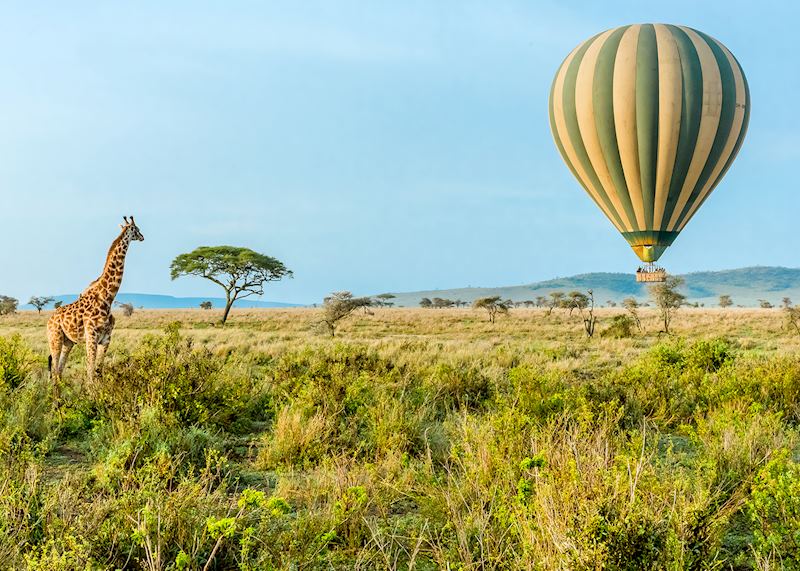
Migrating herds are just one element of a Serengeti safari. An experience that’s stuck with me was my hot-air balloon ride over the savanna, and there wasn’t a wildebeest in sight. Piloted by Captain Tracy (who, I learned, was the first female balloon pilot to fly in Tanzania), our balloon soared over the central plains at sunrise. I saw a pod of hippos and a herd of elephants, along with a scattering of other animals, but it was the landscape that stole the show. The sky had a fiery glow, the grasses were still lush from recent rains, and the further we rose, the more I could appreciate the park’s sheer size.
Insider’s tip: Keep in step with the herds by staying in a mobile safari camp, which up sticks every few months to be as close as possible to the spectacle. I stayed at the luxury Laba Migration Camp in June, when the herds were migrating through the Western Corridor.
A beach stay in Zanzibar
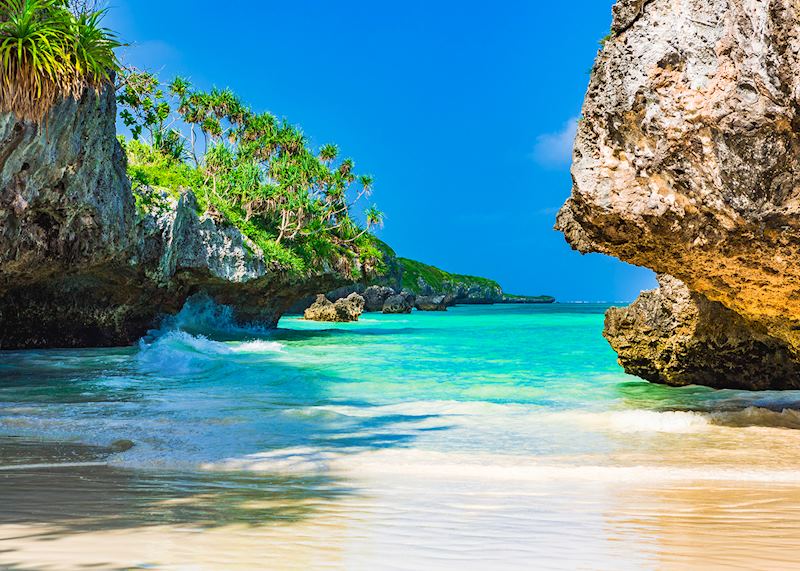
Ending your trip with time on the beach lets you wash the dust off and put all those early morning starts behind you. While Tanzania’s Swahili coast has its own pearly beaches, I recommend flying to Zanzibar instead. It’s just an hour and a half from Arusha, and there’s much more to do and see than on the mainland. The hotels are more luxurious, too.
When you’re not relaxing beneath swaying palms or spotting clownfish as you snorkel, you could visit Stone Town, a centuries-old hub for the spice trade. When I first visited, it felt like I’d entered a whole new country. While Zanzibar is now part of Tanzania, the island has been shaped by various colonial forces, from the Portuguese to the Omanis and the Brits. And Stone Town is a mélange of all these influences. I suggest exploring the city with a guide, who’ll unravel Zanzibar’s complex — and in parts, sinister — history as you walk between forts, merchant residences, mosques, palaces, and markets.
Then, at dusk, watch as hundreds of wooden dhows cast off into the Indian Ocean, their billowing white sails filtering the pink light of sunset. If you like, I can arrange for you to set sail among them, on a dhow of your own, with a private butler to keep your drinks topped up as you toast the evening.
Insider’s tip: Your safari might be over, but there’s still plenty of wildlife to spot in Zanzibar. On a nature walk in Jozani Forest, you might glimpse endemic Kirk’s colobus monkeys, with their crests of unkempt Einstein-like hair. Meanwhile, on the water, look out for bottlenose and humpback dolphins.
Is it easy to get around Tanzania?
If you’re visiting northern Tanzania, I’ll arrange for a private driver to take you between wildlife areas so you can admire the scenery and stop off at villages en route. For the southern part of the country, particularly Nyerere and Ruaha national parks, the quickest way to travel is by light aircraft from Dar es Salaam because the reserves are more remote and many have their own airstrips.
How much time should I spend in Tanzania?
I’d set aside around seven days for a Tanzania safari, either in the north or the south of the country. That’ll give you plenty of time to see a wide variety of wildlife and landscapes, without tiring yourself out too much. I also recommend ending your trip with a few days (or even a week) unwinding on Zanzibar's sandy shores.
When should I go to Tanzania?
Tanzania is a year-round destination, except for April and May, when it’s especially rainy. During the drier (and busier) months of July to October, animals are easier to spot because they congregate around water sources. It’s also when you have the best chance of witnessing the Serengeti’s river crossings. Don’t be dissuaded by the short rains from November to March, though. There are fewer visitors, baby animals arrive, and migratory birds are abundant.
Start planning your trip to Tanzania
Start thinking about your experience. These itineraries are simply suggestions for how you could enjoy some of the same experiences as our specialists. They're just for inspiration, because your trip will be created around your particular tastes.
View All Tours in TanzaniaPlan your trip
Tell us about your plans and one of our specialists will plan a unique trip for you...
Make an enquiryRequest our brochure, The World Your Way

Order your digital copy via email.
Request a brochure