Jump to:
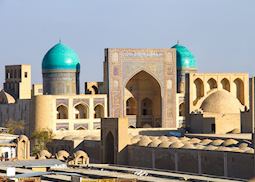
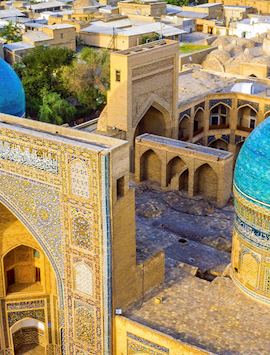
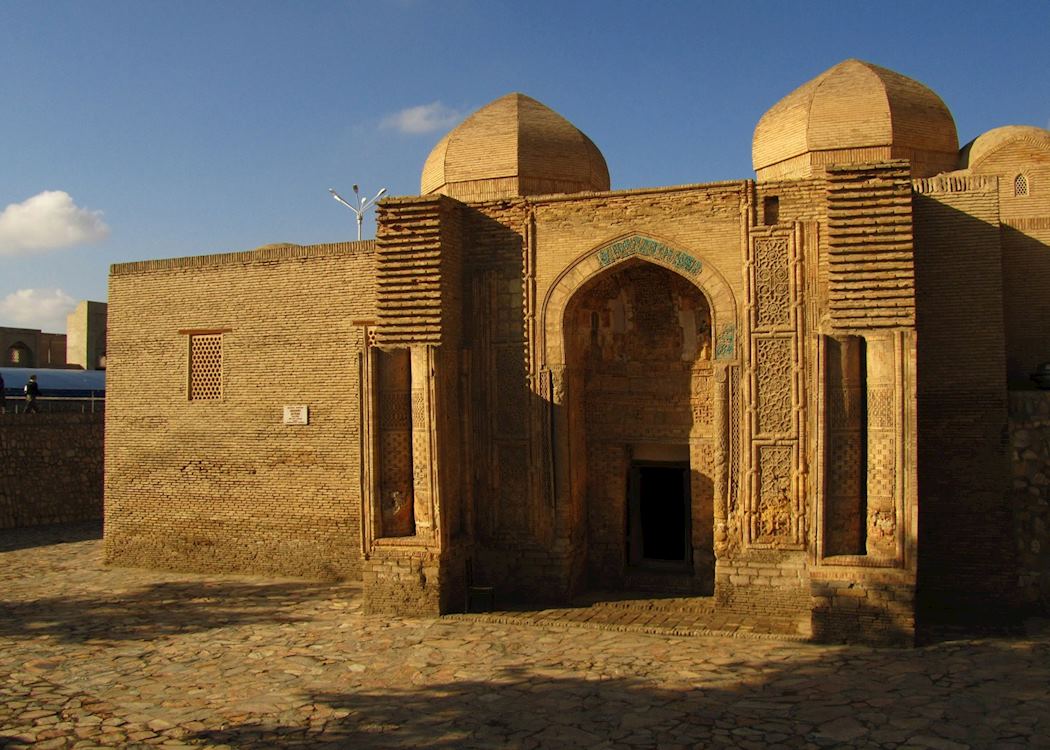
One of Central Asia’s most historic and holy cities, Bukhara rises out of the sandy desert plains like a baked-brick showpiece, adorned by turquoise tiles that decorate its domes, minarets, and portals. A visit here is like stepping into a living museum and offers a deep insight into the city’s wealth of heritage including trade, scholarship, and art. In fact, today it’s protected as a UNESCO World Heritage Site.
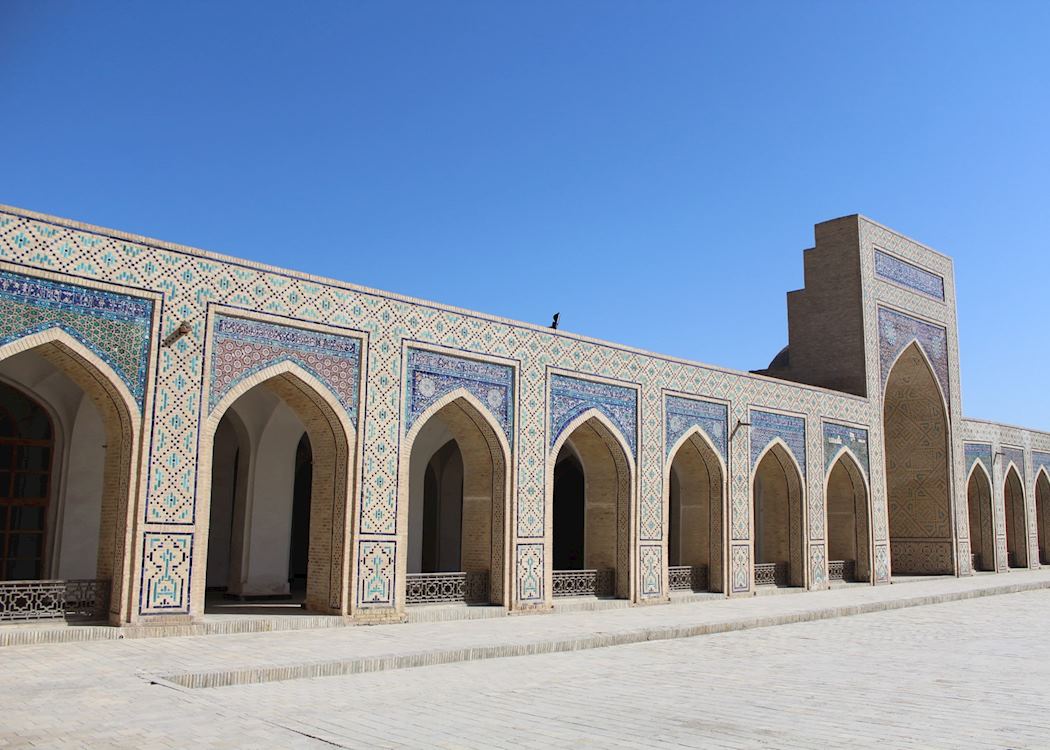
It’s easy to explore its exceptionally well-preserved medieval architecture, slipping into the serenity of the elegant mosques, climbing the winding stone staircases of the minarets, walking the hallowed halls of the madrasas, or simply weaving through shaded alleys that once echoed with caravan bells.
The thriving, centuries-old Silk Road culture is a chance to see the timeless rituals of bargaining and trade. You’ll have the chance to negotiate with local hawkers at the bazaars, sip tea at the plentiful teahouses (chaykhanas), experience the traditional rituals of the hammams, or watch music and dance performances at a caravanserai.
Islamic heritage
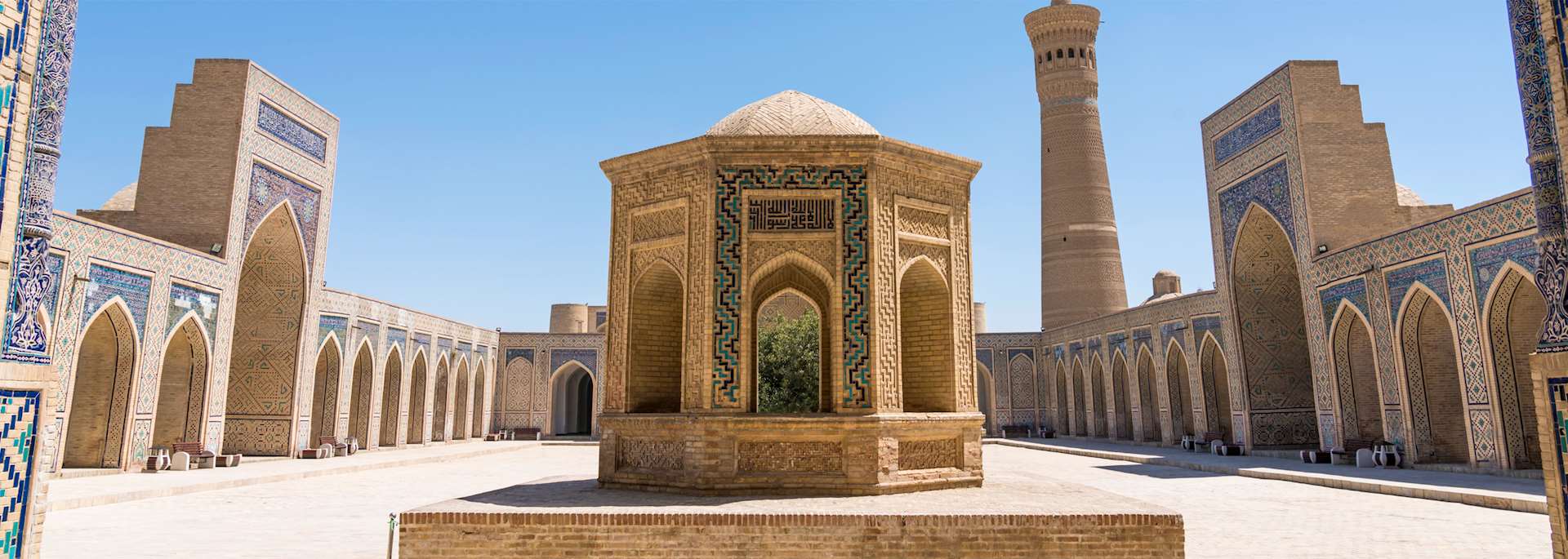
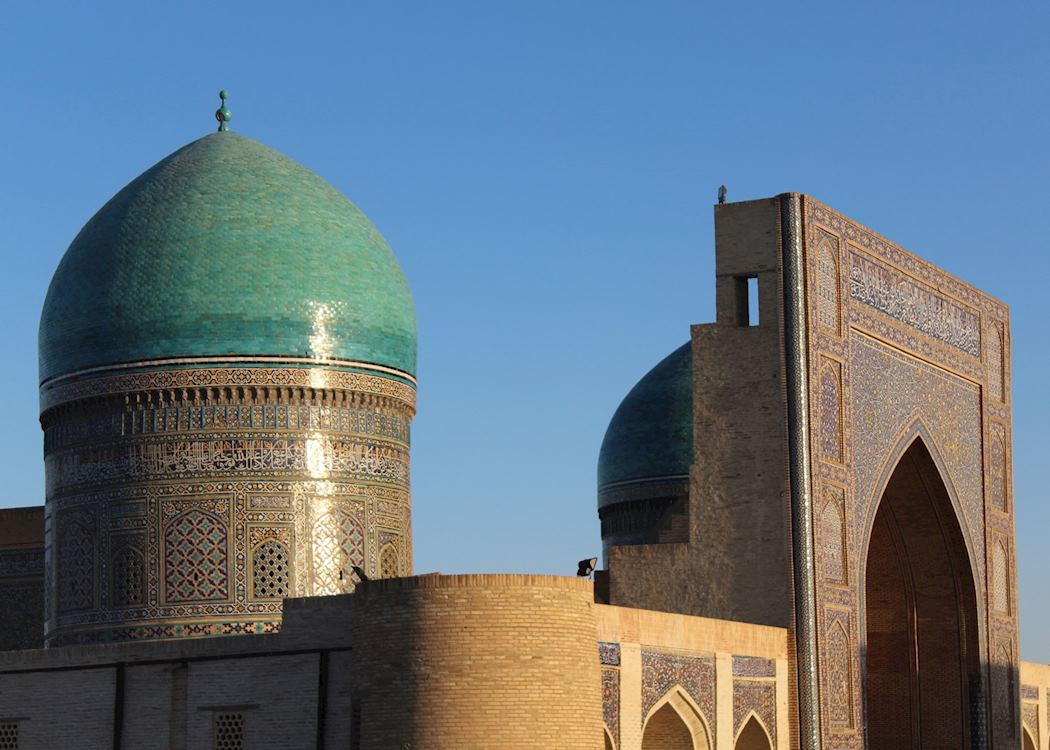
Once celebrated as one of Islam’s holiest cities, it’s often heralded as Bukhara-i-Sharif (noble Bukhara) reflecting its importance within the Islamic world. Bukhara remains rich in spiritual landmarks. At its heart stands the Po-i-Kalyan Complex, a major hub of worship and learning between the 12th and 16th centuries.
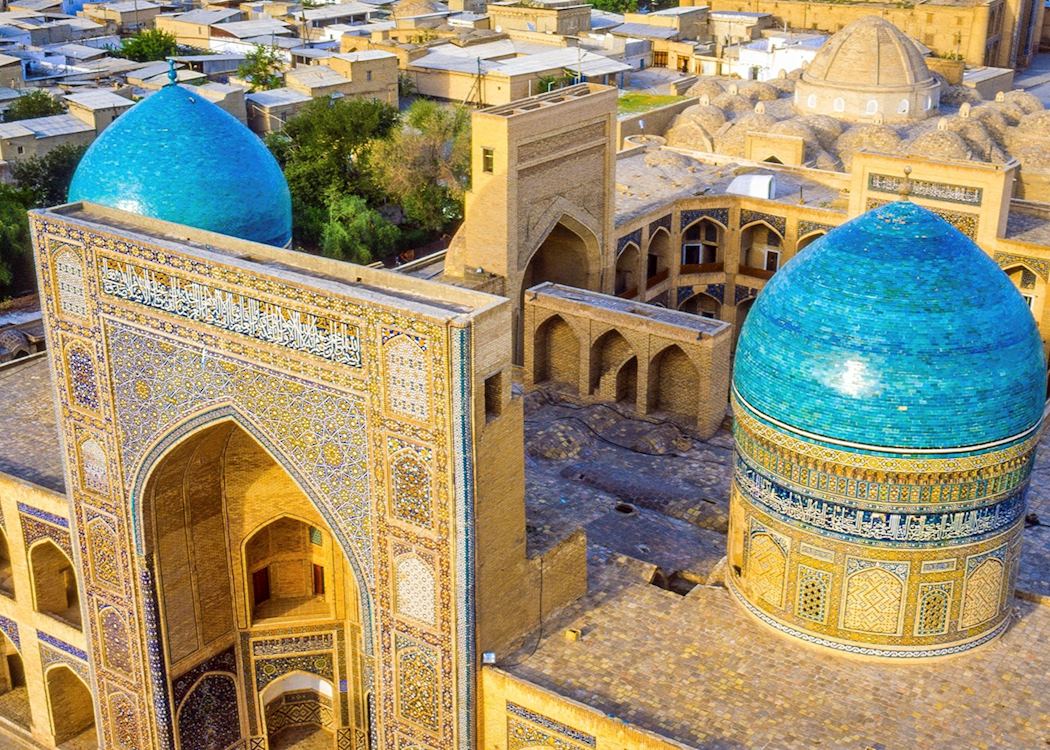
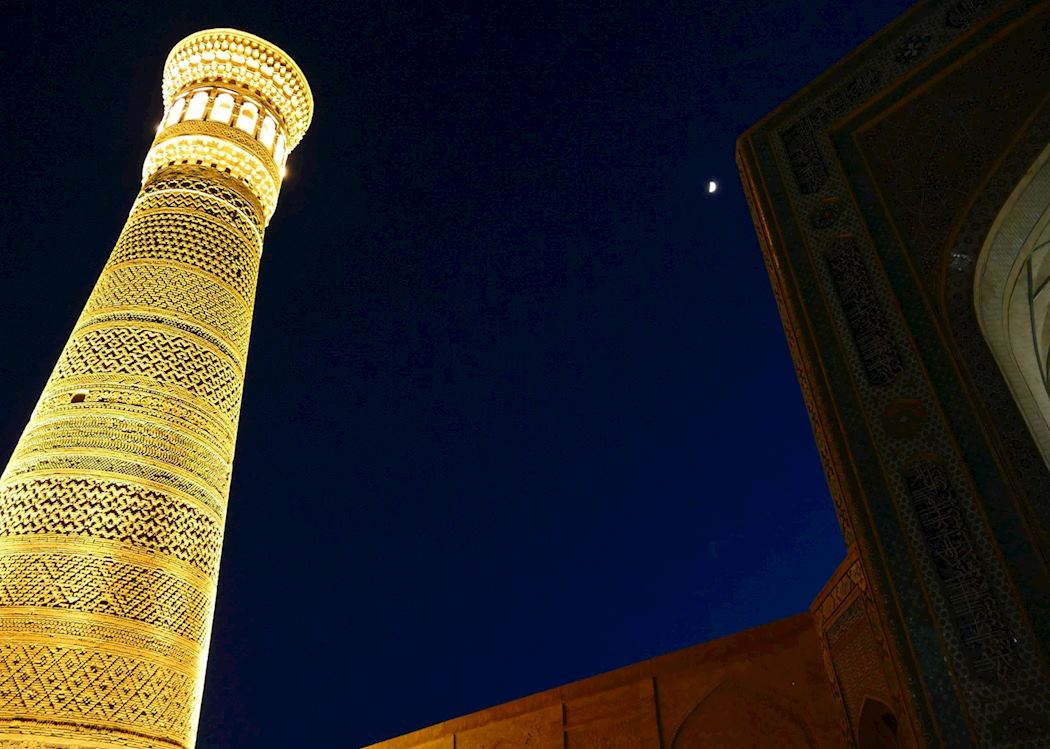
We suggest those interested in a great view climb the 46 m (151 ft) Kalon Minaret, which was spared by Genghis Khan during his 1220 invasion. The view from the top includes a bird’s-eye vista of the turquoise-inlaid portal to the nearby Kalon Mosque. Facing this, you’ll also see the azure-domed Mir-i-Arab Madrasa, which continues to train Islamic scholars and future Imams to this day.
City walking tour
 A walking tour of the city, in the company of a local Bukhari guide, will give you the opportunity to visit these devotional sites, including the geometrically tiled, 15th-century Ulugbek Madrasa, one of Central Asia’s oldest educational establishments. Your guide will help you unpack the significance of the sights, sharing stories from its centuries’ long history.
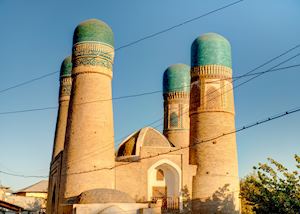
Nearby, the four whimsical towers of the 19th century Char Minar remain an intrigue with their uncertain symbolism, while the 16th-century Khoja Gaukushan Complex ranks among the largest in Bukhara with its own mosque, madrasa, and minaret. Walking the Old City at night gives you an atmospheric alternative to the bustle of the day.
The Ark of Bukhara
Protected by undulating and impenetrable baked clay brick walls, the Ark of Bukhara was in use for over 1,500 years as a fortified citadel. Despite being partially destroyed by Red Army bombardments in 1920, the citadel has been preserved and restored as a museum complex.
Wandering its weaving lanes, you can wind between the traditional inns (caravanserais), devotional buildings, and the amirs’ palatial, mudbrick residences. Maybe end your day with a visit to The Bukhara State Museum of History, inside the former amir’s reception halls, which elaborately traces the full history of the city.
Silk Road traditions
Bukhara began as an oasis where Silk Road caravans from China, Persia, and the Middle East traded silks, spices, and ideas. Today, the vaulted Toqi bazaars still entice you to wander among carpets, embroidered suzani textiles, ceramics, and jewels. While, in workshops, you’ll see artisans shaping clay and weaving fabric, providing an intimate look at the craftsmanship of this Silk Road city.
Cultural relaxation
Some of the madrasas and caravanserais host traditional performances in the evenings and you might come across folk music and dance displays that bring the Silk Road atmosphere to life with lutes, drums, and fiddles creating a melodic shashmaqam (refined court music). Dancers move gracefully alongside, wearing ornate embroidered costumes. By day, the traditional hammam bath houses continue public bathing traditions upheld since medieval times, offering the chance to immerse yourself in an aged ritual.
Best time to visit Bukhara
Bukhara in best visited in either the spring (April to May) or autumn (September to October), when you’ll find the weather bright and pleasantly warm. The harsh cold of the winter and soaring heat of the summer make these seasons less conducive to sightseeing visits.
who's been there

Start planning your tailor-made trip to Bukhara by contacting one of our Uzbekistan specialists
-
617-223-4521617-223-4700
- Make an inquiry
Suggested itineraries featuring Bukhara
Our itineraries will give you suggestions for what is possible when you travel in Bukhara, and they showcase routes we know work particularly well. Treat them as inspiration, because your trip will be created uniquely by one of our specialists.
-
![Bukhara]()
-
![Song-Kul Lake, Kyrgyzstan]()
Highlights of Central Asia: Kyrgyzstan's mountains & Uzbekistan's architecture
Uzbekistan and KyrgyzstanView this tour
Photos of Bukhara



Accommodation choices for Bukhara
We've selected a range of accommodation options for when you visit Bukhara. Our choices usually come recommended for their character, facilities and service or location. Our specialists always aim to suggest properties that match your preferences.
-
![Lobby, Mercure Bukhara Old Town]()
Mercure Bukhara Old Town
Bukhara -
![Hotel Komil, Bukhara]()
Komil Bukhara Boutique Hotel
Bukhara
Ideas for experiencing Bukhara
Our specialists seek out authentic ways to get to know the places that could feature in your trip. These activities reflect some of the experiences they've most enjoyed while visiting Bukhara, and which use the best local guides.
-
Historical walking tour of Bukhara ![Poi Kalyan Mosque, Bukhara]()
Historical walking tour of Bukhara
Historical walking tour of Bukhara
With a local guide, you’ll explore Bukhara’s Old Town on a full-day guided walk. Visiting bazaars, mosques, minarets, and citadel streets you’ll gain an insight into the centuries of stories woven into this historic city.
View details