
By Maldives specialist Sheena
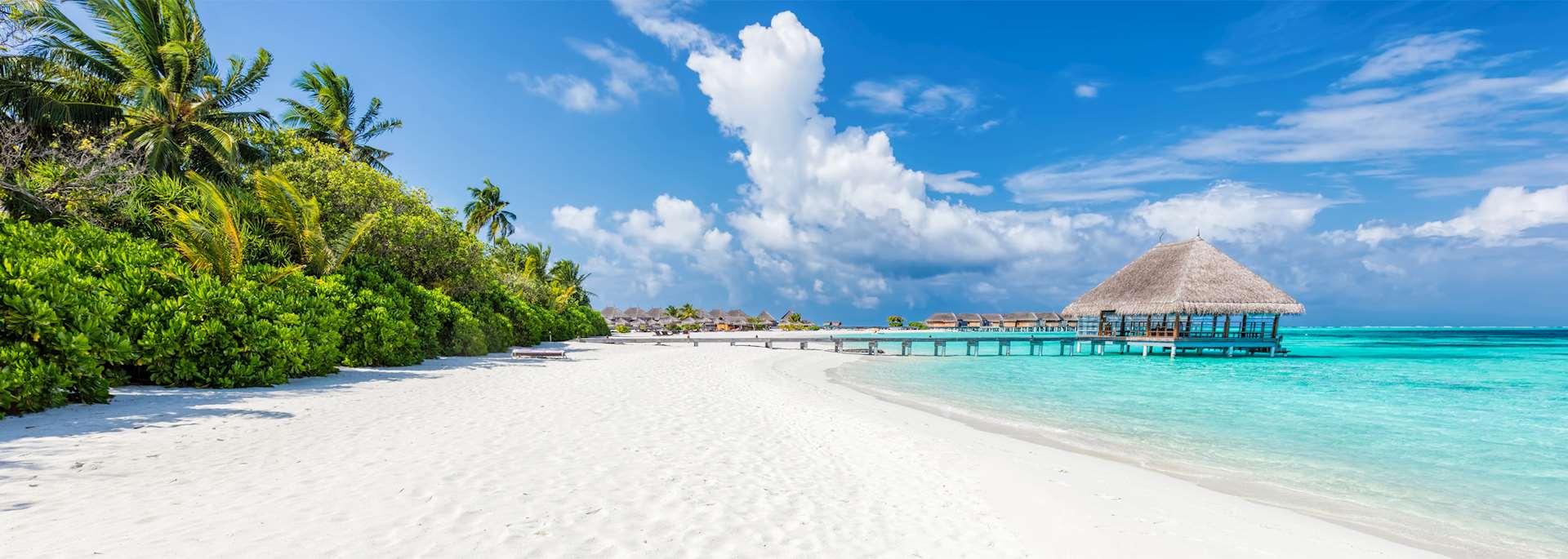
Sun, sea, sand, and overwater bungalows — that’s how you might sum up the Maldives if you’ve never been before, but the archipelago offers much more than feet-up beach days. From wine tasting surrounded by baby reef sharks to scuba diving in coral gardens, a Maldives trip doesn’t have to be limited to pure relaxation.
There’s enough to keep you entertained for a couple of weeks, but equally the Maldives works well in tandem with destinations like India or the UAE for a trip of two halves. While these countries have beaches of their own, few places compete with the Maldives, with many of the islands cradling just one hotel each. I’ve never felt peace quite like it.
These are some of the highlights you could enjoy during a first-time trip. As for where to stay, you might find our separate travel guide helpful.
Snorkeling & diving in and around your resort
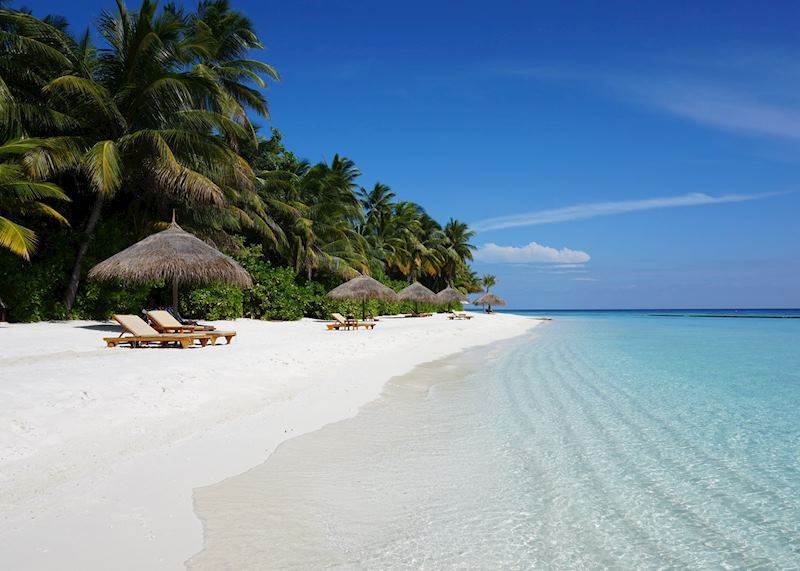
Lionfish with spikes like porcupine quills, green sea turtles gliding near the water’s surface, camouflaged octopuses costuming as coral… The Maldives has a vast breadth of marine life, and most resorts have a house reef, where you can snorkel among the fish without swimming far.
I particularly like Huvafen Fushi, where you can simply step into the water at one end of the beach and be carried along by the drift current. Bobbing gently down the full length of the island, you’ll observe the vivid underwater spectacle below.
Another common sighting is manta rays, which are attracted by the plankton that cluster in the waters around resorts. Manta rays can be found around most islands, though one of the best places to encounter them is Hanifaru Bay — a 10-minute boat ride from Milaidhoo Island Maldives. From June to November, they come in their hundreds to this plankton-rich reef, and Milaidhoo is one of the only hotels with access to the heavily protected area. That said, I had a serendipitous encounter as I walked back to my bungalow at the Conrad Maldives Rangali Island one evening — a lone manta ray swam just below the bridge I was walking over.
If you’d prefer your underwater exploration to go deeper and last longer, I can arrange for you to stay on an island with a dive centre, where you’ll have rental equipment, professional guides, and instructors on hand. Many centres offer basic open-water dive training, as well as refresher and specialist courses.
Spotting spinner dolphins on a cruise
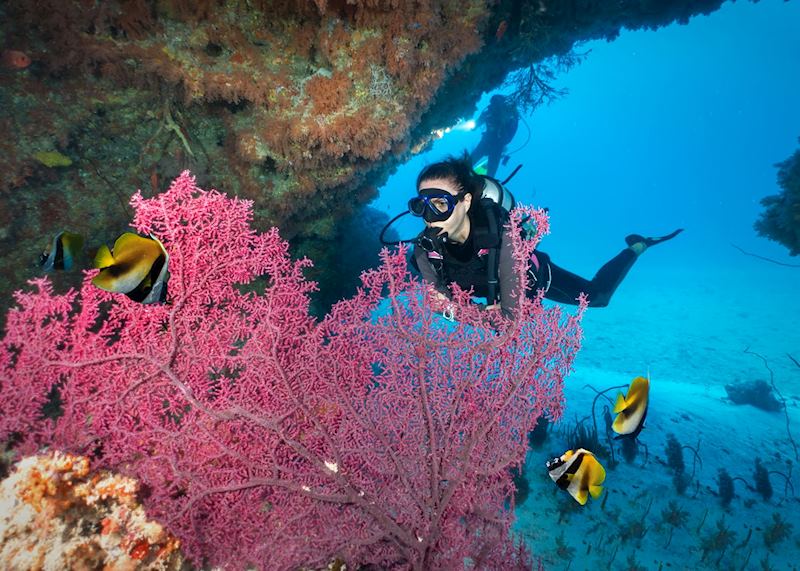
You don't have to go in the water to get close to marine life — you could take a sunset dolphin cruise instead. This is one Maldives experience that’s best shared with a group, offering better value for money and the added buzz of mutual excitement when dolphins are spotted.
During my own cruise, we were only on the boat for a short while before a pod of spinner dolphins arrived. They followed us for over an hour and put on quite a show for their captivated audience, playing, diving, and darting all around. It felt as though they were there solely for our entertainment.
Swimming with whale sharks
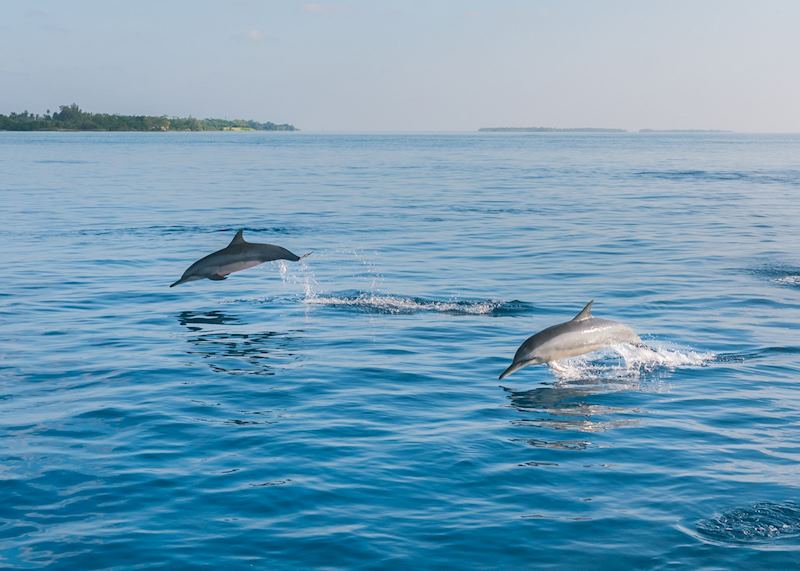
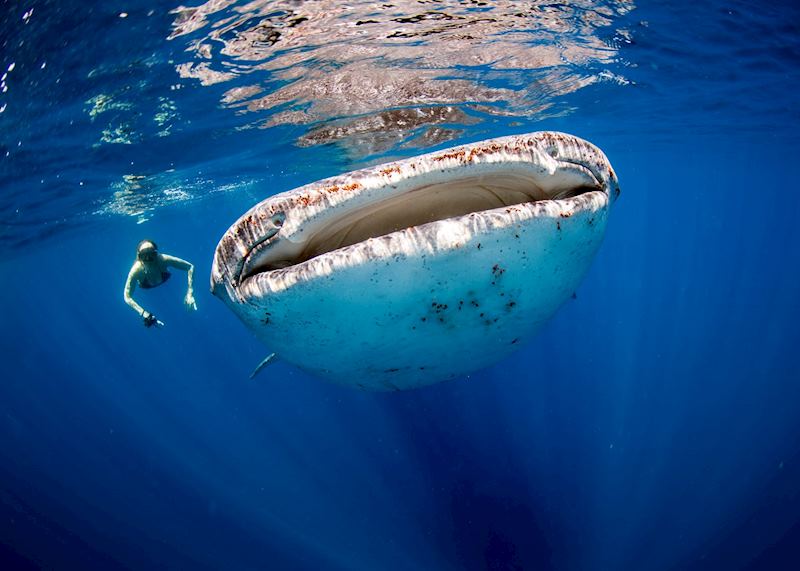
They may be the biggest fish in the world, but whale sharks are gentle giants. Unlike dolphins, they’re not showy. They simply drift beneath the surface, minding their own business as they vacuum up plankton, popping up every now and again.
Seeing them in person had been on my list for years, and during a stay at Conrad Maldives Rangali Island, my wish finally came true. The resort is located just next to the South Ari Atoll, where these huge fish reside year-round, and it works closely with local whale shark specialists.
I met some of these specialists on my boat ride, and they knew where to find the sharks, using drones to pinpoint their exact location. One moment I was sitting, waiting, snorkel in hand, the next our crew was shouting “now, now, now!” and we jumped into the water as quickly as possible. Whale sharks move relatively slowly, but their sheer size makes them hard to keep up with. Luckily, my flippers propelled me forward, and I got to swim alongside them for a good while, observing how they move gracefully through the water.
Wine tasting with reef sharks
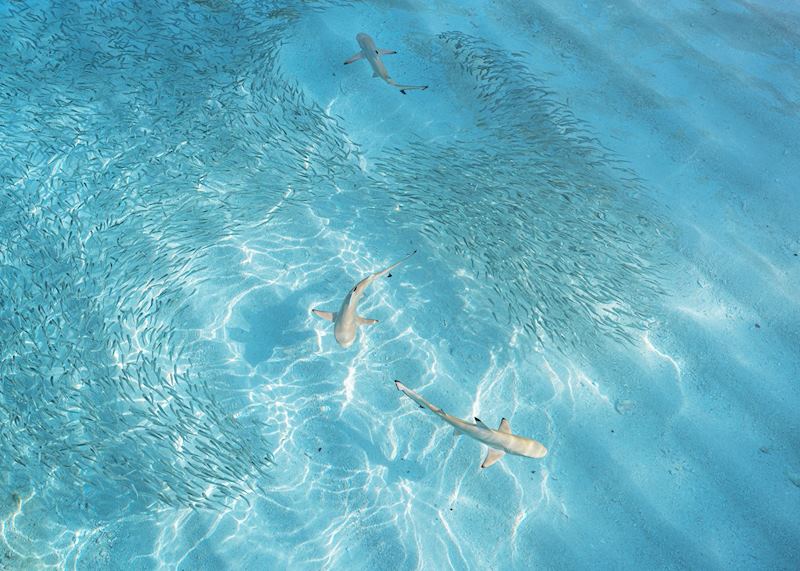
Constance Moofushi is synonymous with good wines, and, during a special tasting experience, you can sip a selection of them in the warm waters of the Indian Ocean. A sommelier will hand-pick bottles for your tasting, laying them out on a table set knee-deep in the island’s lagoon.
As you swirl, smell, and sample each glass, you can peer down at the unfazed miniature sharks that swim in the shallows (one day, they’ll grow to be the size of a human — or bigger). Then, select a bottle to take back to your table for an alfresco dinner.
Sandbank dining & elevated food experiences
The Maldives has a well-earned reputation for good food, whether it’s seafood platters laden with lobster, cuisines from around the world, or fish so fresh you may have snorkeled past them that morning. But it’s not just the food that’s excellent — the whole atmosphere is too.
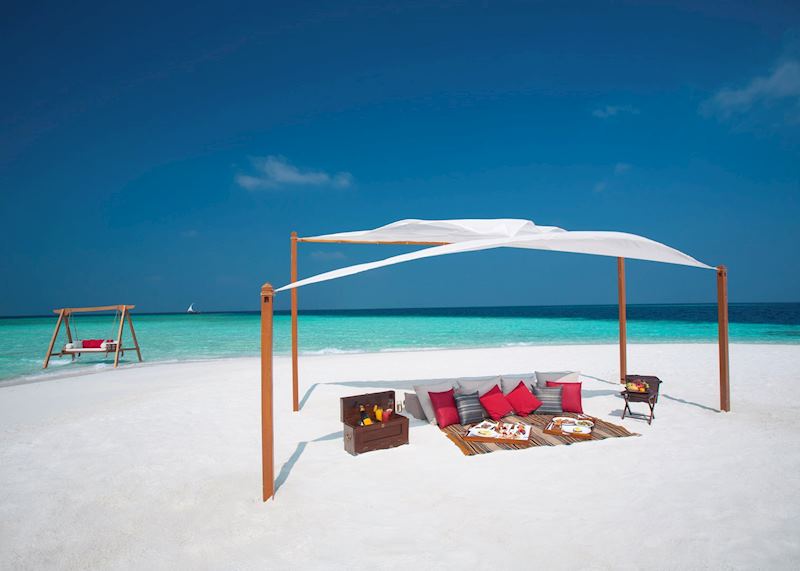
The epitome of Maldivian luxury is a sandbank dinner, offered by both Baros Maldives and Niva Velassaru Maldives. As your waiter lays out your meal on the thila, you can sit back with a glass of Champagne and enjoy the complete isolation, where the only interruption between the sea and the sky is an occasional passing dhoni sailing boat. You can opt for lunch, but I love the romance of a sunset meal, when the sky blushes and lanterns glow softly all around you.
You could also choose to dine on Baros Maldives’ stilted Piano Deck, which appears to float on the water, or round off dinner at Constance Moofushi with a private cinema experience on the beach. There’s also Conrad Maldives Rangali Island’s oceanfront (and open-air) teppanyaki restaurant, where chefs put on a theatrical culinary display right in front of you.
That said, if you’re looking for authentic local food, inspired by old spice trading routes, Milaidhoo has one of the only Maldivian restaurants in the archipelago. Think slow-braised lamb curry, fresh fish poached in coconut milk, and delicately spiced mahi mahi.
Unwinding in an underwater (or overwater) spa
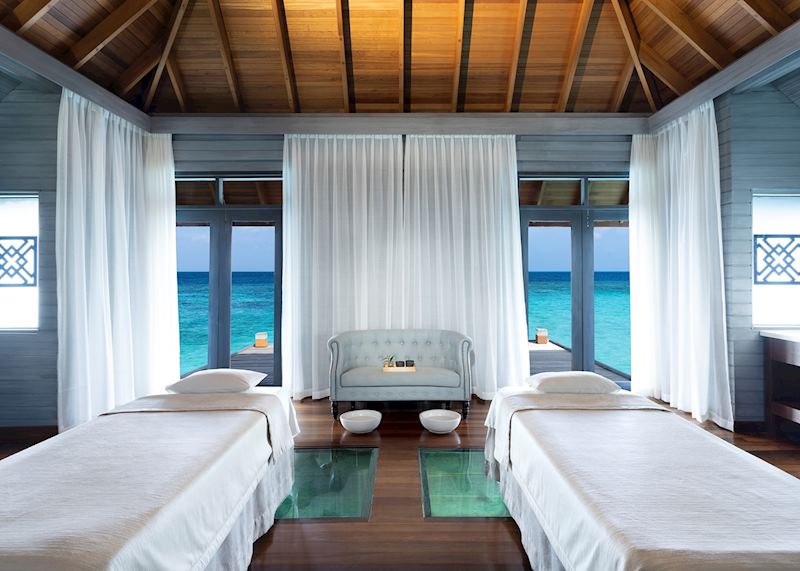
Spas are part and parcel of any Maldives stay, but the glass walls of the underwater spa at Huvafen Fushi take relaxation to the next level. There are also strategically placed mirrors in the treatment rooms so you can take in the scenery even as you lie face down.
I remember seeing a flurry of fluorescent orange clown fish during my own massage. Afterwards, I lingered on the daybed to watch them darting in and out of the corals. At night, the spa transforms into a space for cocktails, canapés, and a chance to join the marine biologist to learn more about the multitude of life swirling around you.
Meanwhile, many other resorts have overwater spas, which are less about the fish and more about unwinding to the sounds of the water. At COMO Maalifushi, all you can see is ocean for miles.
Wherever you stay, I’d suggest pre-booking your spa treatments so you can arrive knowing everything is in place. Take it from me: a massage on arrival sets the tone for the rest of your trip.
Is it easy to get around the Maldives?
All international flights come into Malé, so you’ll need to take a speedboat or seaplane to your island resort. Speedboats are often the quickest option (though some islands are too far away). I recommend taking one if you’re staying in the Maldives for less than a week. If you have more time, taking a seaplane, which are on a more infrequent timetable, gives you a birds-eye view of the atolls that dot the ocean. Once you’re at your resort, you can walk, cycle, or call for a golf cart, depending on how big the island is.
How much time should I spend in the Maldives?
Anywhere between one and two weeks is a good amount of time to relax and explore, though you might opt for less if you’re adding the Maldives on to the end of a busy trip elsewhere. If you’re there for a couple of weeks, you could split your time between two resorts for variety. I’ll ensure they’re near each other to minimise travel time and costs. For example, Anantara Veli and Anantara Dhigu are connected by a short speedboat ride.
When should I go to the Maldives?
The weather in the Maldives is fairly unpredictable, so you need to be prepared for rain whenever you go. I’ve visited during the wet season (May to November) and experienced two weeks of sunshine, but equally there’s been rain when I’ve gone in the dry season (December to March). So, take the seasons with a pinch of salt and go when it best suits your travel plans. Manta rays and whale sharks are spotted in different atolls at different points of the year, so I can advise you on that as we plan.
Is the Maldives good for families?
The Maldives is no longer just a destination for couples — there are a number of resorts that are well set up for families. With children's clubs, play areas, and babysitting services, Niva Kurumba Maldives is a popular choice. It’s only a ten-minute speedboat journey from Malé, and I’ve found it to be excellent value for money. Conrad Maldives Rangali Island also has childcare services, plus children can join the resident marine biologist, who’ll bring the seabed to life as they point out turtles, octopuses, and fish darting in among the reef.
Start planning your trip to the Maldives
Start thinking about your experience. These itineraries are simply suggestions for how you could enjoy some of the same experiences as our specialists. They're just for inspiration, because your trip will be created around your particular tastes.
View All Tours in The MaldivesPlan your trip
Tell us about your plans and one of our specialists will plan a unique trip for you...
Make an enquiryRequest our brochure, The World Your Way

Order your digital copy via email.
Request a brochure