
By Canada specialist Emily
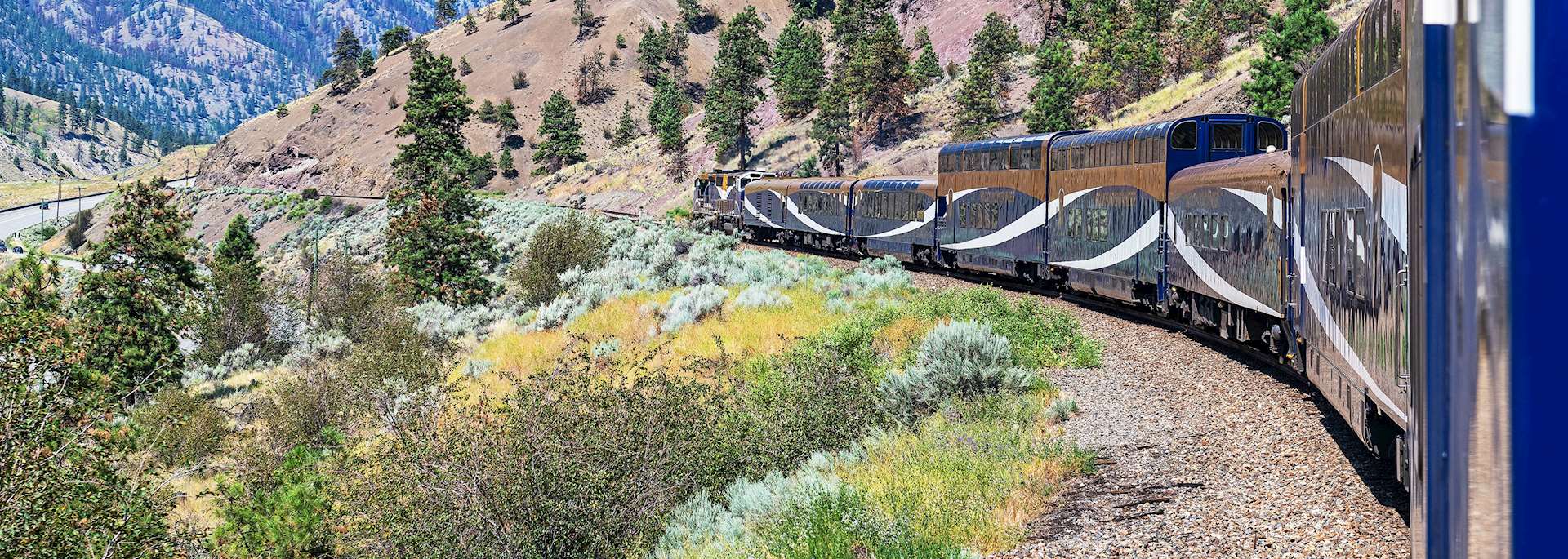
Embarking on a rail journey is an exciting way to appreciate a region’s history, wildlife, and natural beauty, whether you’re aboard a modern train with panoramic windows or a traditional 19th-century-style locomotive.
In Canada, you can take this one step further, winding through some of the most dramatic settings in the world. Below, I’ve shared some of the best rail trip routes and experiences in the country, from a multi-day cross-country adventure to a steam train journey high in the mountains.
Choose your train journey
Toronto to Vancouver on The Canadian
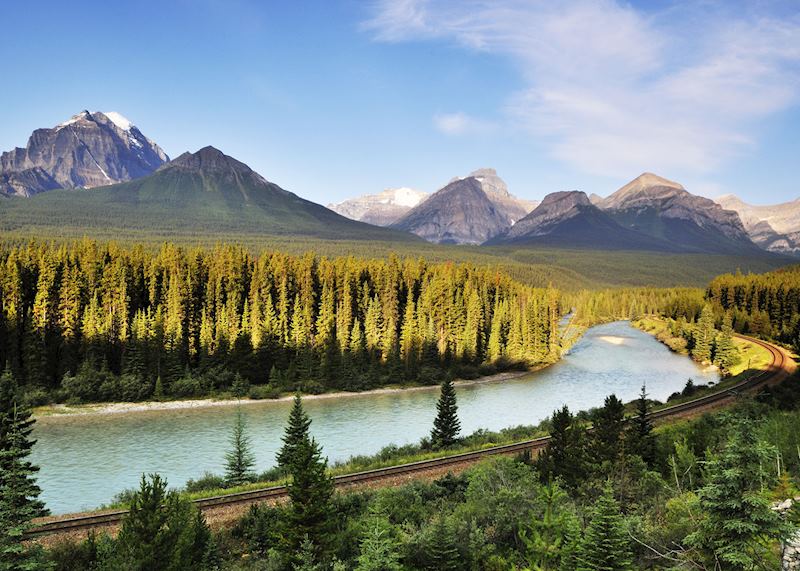
The Canadian covers the popular Toronto-to-Vancouver rail route (and vice versa). Stretching across a large chunk of continental Canada, it’s a journey that demonstrates the sheer variety of the country’s dramatic landscapes.
Heading toward Winnipeg, you’ll pass countless glistening lakes and dense boreal forests, which thin out into long-stretching prairies as you reach Saskatoon. From there, you’ll travel briefly through the Rockies in Jasper then the desert interior of British Columbia before hitting Vancouver’s urban cityscape.
Onboard experience
There are a variety of different cabin options on board this sleeper train, including private cabins and individual berths. I recommend Sleeper Plus, which includes all food and drinks, as well as a cabin for one to two guests. These have seating that converts into beds, as well as en suite bathrooms.
Another recommended option is the Prestige Class cabins, featuring a comfortable double bed, a private shower, a flatscreen TV, and all meals and drinks, as well as butler service. However, this is particularly popular, so you might need to plan well in advance.
During the day, I suggest spending time in the communal glass-roofed car, which has panoramic views of the scenery. The train’s interpretive guides will tell you all about the area you’re passing through, and the driver will make an announcement if any bears or other wildlife are sighted. Entertainment is also provided on board for longer journeys, including wine tasting and musical performances.
Journey duration
The entire journey takes four nights and five days, covering a distance of 4,466 km (2,775 miles). You can choose to break this up and spend more time in several of the destinations. Or, if you’re short on time, you can opt to travel just part of the route.
Best time to go
The scope of scenery you can see on a trip aboard The Canadian means there’s something for everyone in every season. In summer the lakes sparkle, in autumn the forests are a tapestry of reds and yellows, and in winter, the whole country is shrouded in powdery snow. I’m partial to spring, particularly mid-May, when all the greenery is fresh and in bloom.
How to extend your journey
The beauty of The Canadian is that you can experience plenty of Canada’s biggest attractions en route, including showstoppers in Toronto and Vancouver.
While in Toronto, I like to get outside and stretch my legs as much as possible in preparation for the journey ahead. In particular, I’m fond of cycling around Toronto Islands, especially on an evening tour, when you can gaze up at the lakeside skyscrapers in relative quietude.
You might also consider splitting your train journey at Winnipeg. Manitoba’s capital, it’s a cultural hub with an assortment of unique museums. This includes the Canadian Museum for Human Rights, which captures a sober examination of civil freedoms over the centuries in a swirling, multistory structure.
Not to mention the city is your gateway to Churchill and Northern Manitoba. Here, you can stay in remote wilderness lodges (many only accessible by private plane) and venture out onto the Canadian Shield’s seemingly endless tundra in search of polar bears. You’re also likely to see Arctic foxes, caribou, and, in certain seasons, beluga whales.
Vancouver to Jasper on The Rocky Mountaineer
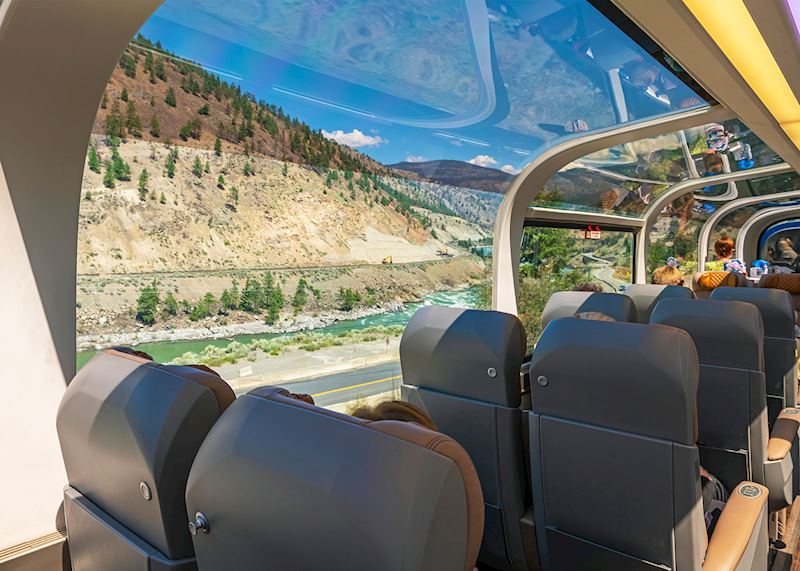
With its gourmet meals, free-flowing drinks, fully guided commentary, and unrushed pace, the Rocky Mountaineer train is widely heralded as Canada’s most luxurious rail experience.
Of the several journeys on offer with the rail company, I’m particularly fond of the Vancouver-to-Jasper route. Beginning in the verdant Fraser Valley, you’ll loop around copper-toned canyons, rushing rivers, and the snow-capped Cascade Mountains before turning in for the night in the outdoorsy town of Kamloops. Your second and final day then takes you into the Rockies, where between witch-hat-shaped peaks and matchstick trees you’ll spot turquoise-teal lakes and gushing waterfalls — all while dining on contemporary local fare.
Onboard experience
The Rocky Mountaineer’s premier option is the GoldLeaf Service. Here, you’re seated in a two-floor car, where the upper level is reserved for sightseeing and the lower level is a dedicated restaurant area. You can also expect an elevated dining experience, with signature cocktails and à la carte meals, such as juicy Alberta striploin steak.
Alternatively, there’s the SilverLeaf Service, where the full experience takes place in a single-level car. Regardless of which you choose, both cars provide ample leg room (enough to stretch out), as well as adjustable lumbar support, which has been designed so you never impede the people behind you. Plus, the glass-dome windows mean you have maximised views from all directions.
A particular highlight on my journey was the level of service, which never ceased to be excellent from the moment the train station staff waved us all off in Vancouver. Our onboard hosts were fully accommodating, for example, moving the seats for a family of four to face each over. Not to mention, they were full of titbits, giving full commentary whenever we slowed down for major sights. And we never went hungry — the whole journey we were lavished with food and drinks, from tangy lemon raspberry drizzle cake to fresh-fruit mocktails.
Journey duration
The Vancouver-to-Jasper route with the Rocky Mountaineer is approximately 900 km (559 miles) and travels over two days. However, exact timings can change due to the priority of freight trains on the tracks.
Best time to go
Although it operates from April to October, my latest journey aboard the Rocky Mountaineer in mid-September provided the best of all worlds. I saw plenty of ospreys and eagles by the rivers, the glacial lakes were still a glittering blue, and yet the leaves were turning a vibrant orange around Mount Robson.
How to extend your journey
My recommended way to experience this route is by journeying from west to east so you can see the world turn wilder as you approach the Rockies. But, before you head off, I encourage you to allocate time to explore Vancouver’s urban sights, such as Granville Island Market. With the huge selection of food on offer, the best way to experience the market is on one of the bespoke “grazing” tours, where you’ll have 20 tastings, from local cheeses to candied salmon.
Terminating in Jasper, you’ll also likely want to get outside after two days on the train. For me, nothing beats exploring the far-stretching scenery from a motorcycle side car. All kitted out and moving by Harley-Davidson, you’ll visit the area’s highlights, including the thunderous Athabasca Falls and the blue-green Medicine Lake.
Montréal to Halifax on The Ocean
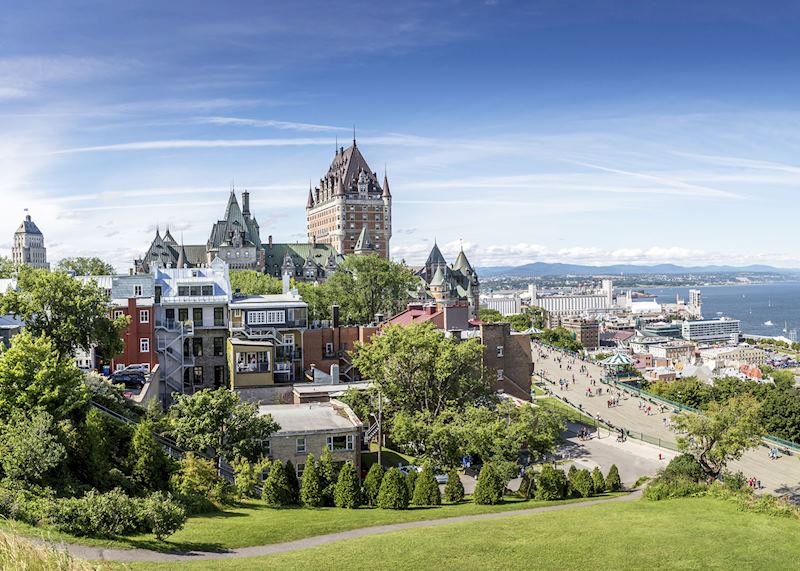
The Ocean connects cosmopolitan Montréal with the port town of Halifax — Nova Scotia’s capital. En route, you’ll pass through historic Québec City, bucolic countryside dotted with wildflowers, rural towns and villages, as well as the quiet maritime province of New Brunswick. While much of the journey is inland, the train skirts a craggy coastline as you approach Halifax, where the ocean is in close view from your picture window.
Onboard experience
The Ocean has both Economy and Sleeper Plus classes. While the Economy class doesn’t offer private cabins, seats are comfortable with plenty of legroom, and blankets and pillows can be purchased.
Meanwhile, Sleeper Plus carriages have private cabins for one or two passengers, with sofas folding into bunk beds at night, as well as your own toilet and closet (some even have private showers). Sleeper Plus passengers also have priority reservations in the dining car and all refreshments are included in the journey. You’re offered at least three meal choices, from fresh salmon to vegetarian dishes.
The train is used by Canadians for everyday travel, and you can meet fellow passengers over a drink in the two public lounges. During my time on board, guitars were played, stories were told, and songs were sung.
Journey duration
This route travels for 1,346 km (836 miles), crossing large swathes of the provinces of Québec, New Brunswick, and Nova Scotia in around 23 hours.
Best time to go
Between Montréal and Québec City, the train runs along a forest-carpeted route beside the mighty St. Lawrence River. Take the journey during the fall (September to October), and you can see the trees in their autumn cloaks as the leaves turn from green to orange and crimson.
How to extend your journey
I recommend stopping off at Québec City. The oldest fortified city in North America, its historic heart resembles an old French town — its cobbled streets lined with cafes and bistros. One of my top things to do in the city is a gastronomic walking tour of the fine-dining restaurants. On this, you try a pick-and-mix of Québécois and international dishes while a local guide takes you on a historical journey.
It’s also worth exploring the Hopewell Cape area near Moncton in New Brunswick. You can hire a car and visit the Bay of Fundy, which experiences one of the world’s highest tides. It’s strange to see boats sitting in mud in the harbours, only to return a few hours later and notice how much higher the water has lifted them.
Jasper to Prince Rupert on The Skeena
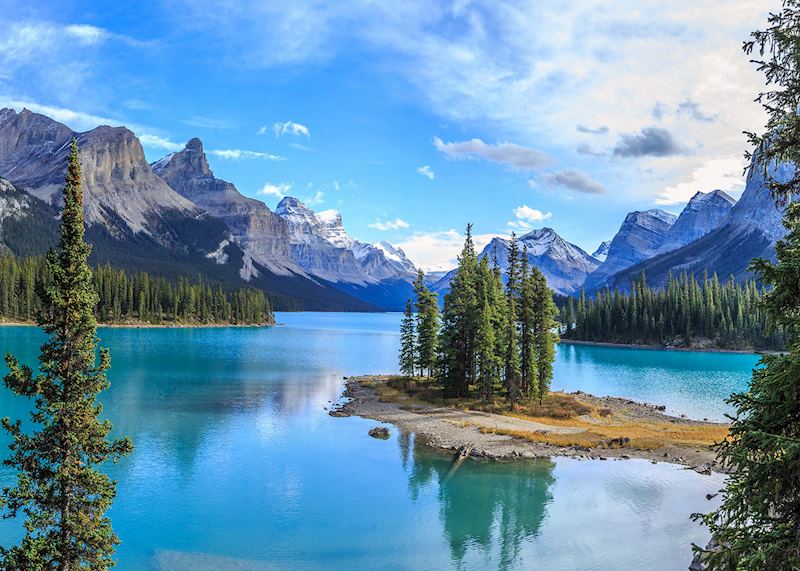
The Skeena runs between Jasper in the Rocky Mountains and the small port city of Prince Rupert on British Columbia’s coast. Completed in 1914, this historic journey is seen by many as the most scenic of all Canada’s great rail journeys, taking you through the wild and rugged Jasper National Park, with its blue-tinged glaciers, pristine lakes, and towering peaks, and along the winding Skeena River.
Finishing in moss-clad temperate rainforest, you have a decent chance of sighting wildlife, including bears, moose, elk, and bald eagles. You’ll also pass old sawmills, farms, and tiny settlements. There’s a real sense of the remote out here, and some of the stops seem to be in the middle of nowhere, with no station and only a couple of locals getting on and off.
Onboard experience
There is only one car option on board The Skeena: Economy Class. It’s comfortable with padded seating and plenty of legroom, though refreshments come at an extra cost.
In addition, the train’s daytime-only schedule allows you to experience the punch-packing views en route in full. That includes not only the sheer bluffs and snaking rivers, but also the tiny townships and Indigenous communities along the tracks.
Casual stops for locals, many of them loggers and ex-miners, are par for the course on board The Skeena, and some of them were more than happy to share their stories with me. My biggest takeaway: those in the know call the train the “Rupert Rocket”… somewhat ironically.
Journey duration
Covering a distance of 1,160 km (721 miles), the journey takes just under two days, with an overnight stop at a hotel in the small city of Prince George.
Best time to go
To see the lakes at their most glittering, you’ll want to travel between mid-June and the end of September. Alternatively, there’s something quite charming about The Skeena in winter, when the mountains are wrapped in frost and Economy passengers have full access to the observation car.
How to extend your journey
The terminus of The Skeena, Prince Rupert, sits on the edge of the Great Bear Rainforest, making it an excellent base for exploring. This misty temperate rainforest, dense with moss and gnarly old-growth trees, houses the largest population of grizzly bears in the world.
To catch sight of them thriving in a protected habitat, I recommend taking a boat trip into Khutzeymateen Provincial Park. Cruising through the fjords, you’re likely to spot some local sea life, from orcas and seals to throngs of rushing salmon in the summer.
Humpback whales also pass by Prince Rupert on their migration route (late July to September). You have a high chance of seeing them, breaching and splashing about, on a boat tour that ventures out into Pacific.
Whitehorse to Skagway on the White Pass & Yukon Route Railway
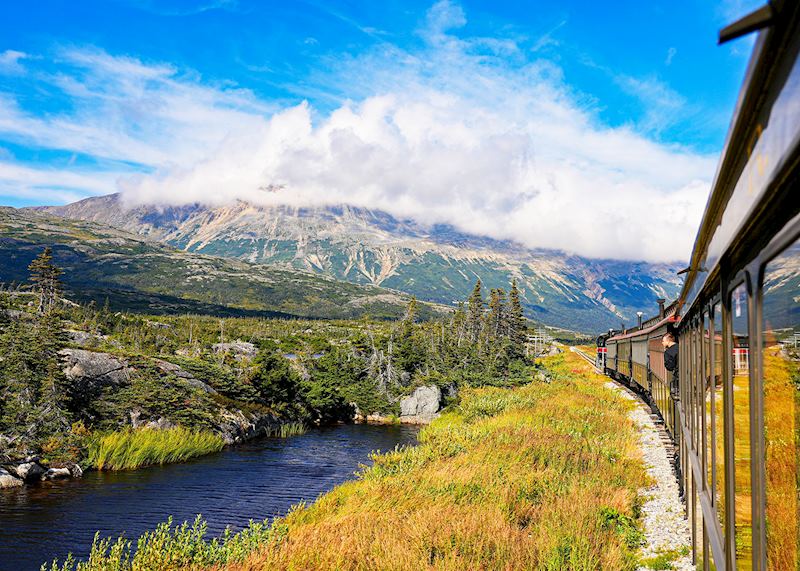
Running between Whitehorse in northwestern Canada and Skagway in southern Alaska, the White Pass & Yukon Route Railway crosses the towering landscapes of the Yukon and British Columbia. Built during the Klondike Gold Rush in 1898, thousands of men blasted their way through these horizon-dominating mountains to gain access to the gold mines within.
Today, you can take one-way or round-trip journeys along the railway aboard a steam or diesel train (with certain routes including partial travel by motor coach). You’ll pass mountains dappled with evergreens, deep gorges carved out by rivers, and frothy waterfalls spilling over rocks. Then, your adrenaline starts pumping, as you cross trestle bridges, enter dark tunnels cut into the rock, and ascend high into the peaks, moving from spring flowers and swathes of tall trees to deep snow.
Onboard experience
Your experience will differ slightly depending on which journey you take. For longer routes, you can expect to dine on board with a hearty meal that has both meat and vegetarian options, while shorter journeys might only provide a boxed lunch or extra-cost refreshments. As part of some services, you’ll also take a motor coach from Whitehorse down the mountain-fringed South Klondike Highway before boarding your train.
The train ride itself retains a nostalgic, historical feel that seems true to the route’s past. The steam locomotive’s cars are traditional in style, made of dark wood with large square windows and brass door handles. During my own journey, the conductor also wore a 19th-century outfit complete with white gloves and a round, squared-off hat. Plus, there are the small touches, such as the old-fashioned printed guidebooks left on each seat, which detail what you can expect to see at certain points on the journey.
Journey duration
Although there are several shorter journeys to take on the railway, the classic Whitehorse-to-Skagway return route takes approximately 10 hours, with time both on the train and on board a motor coach.
Best time to go
Many of the journeys on the White Pass & Yukon Route Railway only operate from late spring to early autumn. I find late June an ideal time to travel because the crowds are thinner, but the slopes are in full bloom and the waterfalls still frothy and powerful.
How to extend your journey
Raw, untamed, dramatic vistas are the Yukon’s raison d'être. Nowhere encapsulates this better than Kluane National Park, which is just a 45-minute drive from where you’ll board your train in Whitehorse.
Home to Canada’s highest peak (Mount Logan), Kluane is a medley of powdery ice fields, lush valleys, and lapis lazuli lakes. You can hike the greenbelt on your own, making sure to keep an eye out for the likes of moose, wolverines, and peregrine falcons. The mountains, though, can only be reached by helicopter, and on a flightseeing tour of the area, you’ll clip past snow-capped giants before touching down to walk on the ice fields with an expert guide.
For a more relaxing approach to Canadian nature, I also suggest staying a night or two at Southern Lakes Resort in Tagish. These traditional log cabins overlook a quintessential glacial lake, where you can enjoy fishing, boat trips, and paddling during the summer.
Read more about Canada rail journeys
Start thinking about your experience. These itineraries are simply suggestions for how you could enjoy some of the same experiences as our specialists. They're just for inspiration, because your trip will be created around your particular tastes.
Plan your trip
Tell us about your plans and one of our specialists will plan a unique trip for you...
Make an enquiryRequest our brochure, The World Your Way

Order your digital copy via email.
Request a brochure