
By Morocco specialist Alanna
From imperial cities latticed with souqs to desert dunes that shelter nomadic camps, Morocco’s distinct landscapes have cultivated an array of cultures: Arab, Amazigh, Bedouin, European… the list goes on.
I find the best way to encounter them all, as well as the country’s very best scenery, is on a looping trip that takes in Marrakesh, the High Atlas Mountains, Erg Chebbi, and Fez. Along the way, you can learn to barter for a carpet like a local, bake bread the Amazigh way, and ride a camel to a tented camp in the middle of the desert.
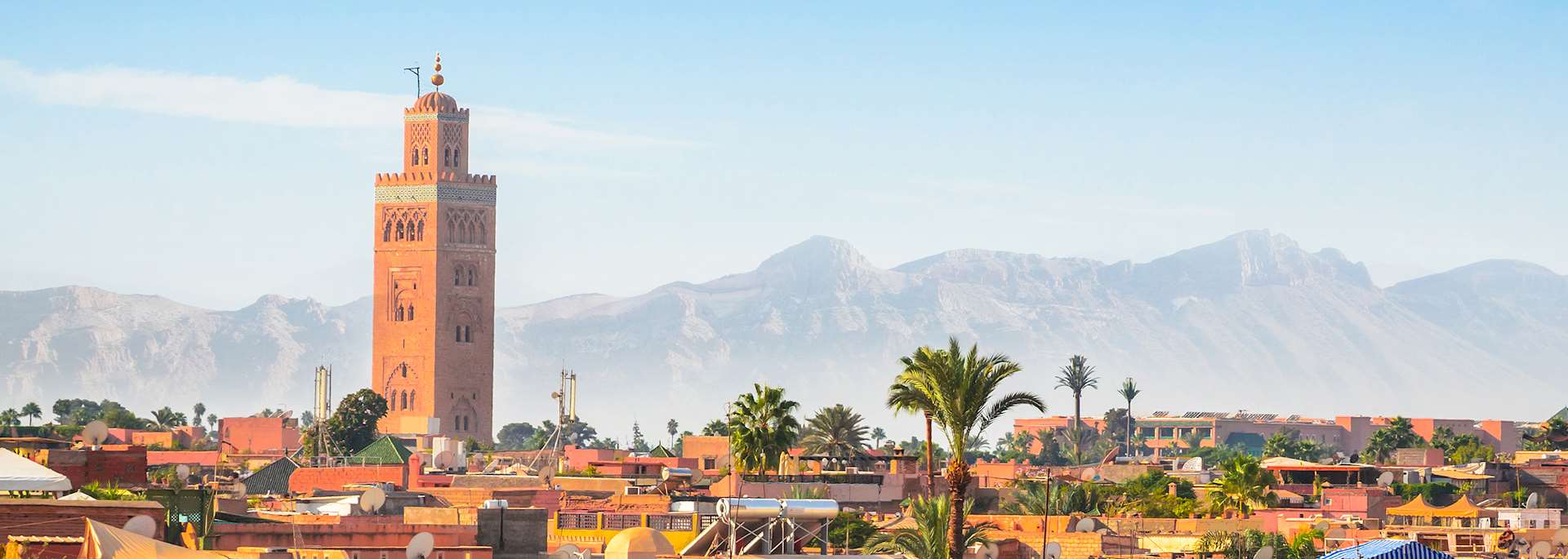
Uncovering the souqs & sites of Marrakesh
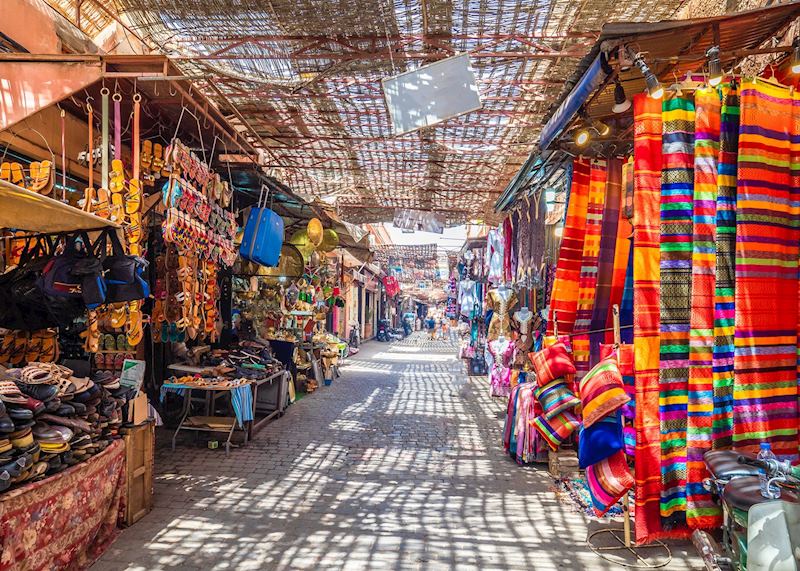
One of the best ways to experience local life in Marrakesh is in its medina (old town) souqs, an intricate maze of cubbyhole stalls overflowing with everything from kaleidoscopic lamps to piled-high spices. Getting to grips with the art of haggling and navigating the narrow alleyways can be challenging, so it can be helpful to go with a guide.
On my last visit, we were beckoned into a shop by a man selling carpets. We followed him into this beautiful old riad (a traditional house with a central courtyard), where we sipped mint tea while he explained the different patterns and weaves of each rug. He could tell just by looking at them where they’d come from because each community in the mountains uses different designs and dyes. It can take hours to haggle for a rug, but your guide will be by your side to make sure you get a good price and enjoy the process (which involves plenty of laughter, if you’re doing it right).
I recommend spending another day peeling back the layers of the city’s history. A visit to the Badia Palace, followed by the Bahia Palace, shows how Moroccan art and architecture changed over time, from 16th-century Kasbah-style designs with rough stone walls to 19th-century zellij tilework and carved cedarwood doors. Meanwhile, in the Mellah — the Jewish quarter — balconied buildings with sunbaked walls face each other across tight walkways, from which locals dart in and out of bakeries, shops, and hammams.
Insider’s tip: Djemaa El Fna, the city’s main square, has some of Marrakesh’s best food, but there are so many stalls it can be hard to know where to start. On a private tasting tour, your guide will help you choose the dishes that most suit you. You might sample freshly squeezed orange juice, honey-sweetened pastries, and tagines piled high with dried fruits and olives.
A visit to the Amazigh villages of the High Atlas Mountains
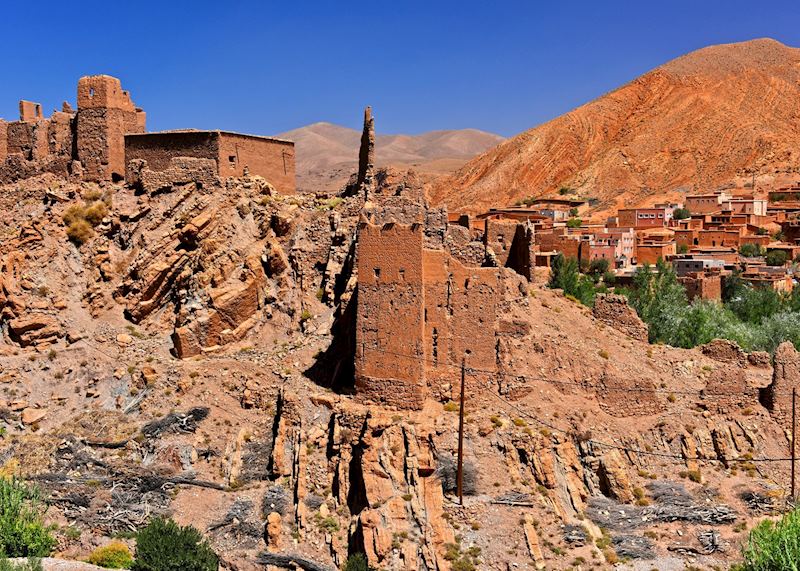
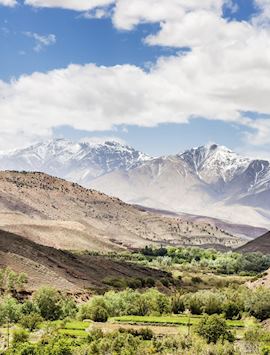
When I first visited the High Atlas Mountain range, I couldn’t quite believe I was just 45 minutes from the hectic souqs of Marrakesh. Honking horns and lively chatter are replaced with birdsong and the woosh of the wind cutting through the valleys, while views of twisting streets are switched with juniper-speckled peaks that lap each other into the distance and appear rust red in the morning light.
A visit here, even just for the day, offers a peaceful respite from city life. But that’s not all. The region is also the heart of Amazigh culture, giving you a chance to meet the Indigenous communities who’ve been living in the mountains for centuries.
There are hundreds of villages built into the hillsides, but my recommendation is to spend the day at just one, where you’ll be welcomed into a family’s earthen home to bake bread and make tagine before sitting down to eat together. During my own visit, I also learned how to make mint tea the traditional way: poured from a great height to make sure it’s bubbly and brewed with almost an entire bag of sugar — the sweetest tea I’ve ever had.
Insider’s tip: A flying visit is enough for some, but I find a night or two in the mountains really helps me to unwind after a frenetic couple of days in Marrakesh. Slowing down the pace, you can hike through olive groves, past mud-brick houses, and to viewpoints where you can see the mountains fading into the horizon.
Desert stargazing in the Erg Chebbi
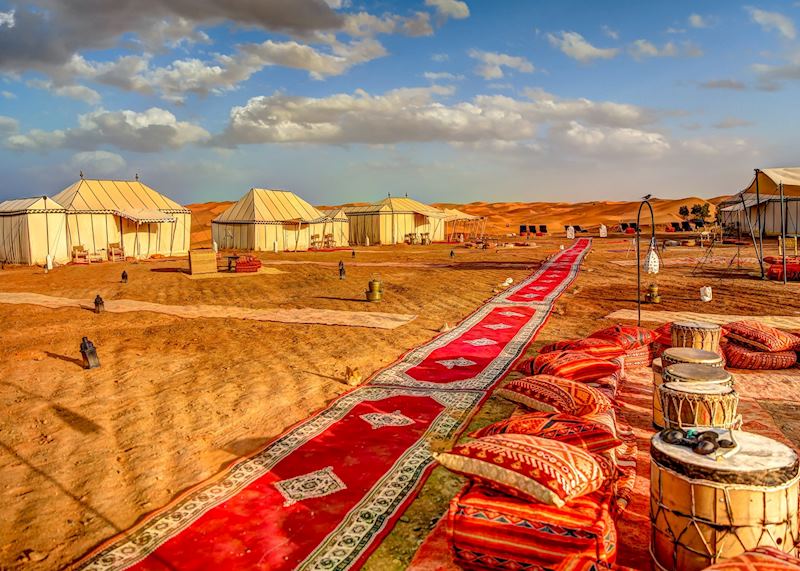
Erg Chebbi is the last outpost before the Sahara Desert’s sands unravel into Algeria. The region is known for its fossils and wind-sculpted dunes. It’s quite unlike anywhere else in Morocco, and I’d recommend an overnight stay at a traditional Bedouin camp to do it justice.
You’ll most likely journey to the camp on a dromedary camel, making your way across the sea of dunes caravan-style. This is usually timed to catch the sunset so you can watch the sand light up in the day’s last rays. I love how it makes the dunes appear two-toned — blazing orange on the side of the sun and silhouette-black on the other.
To the untrained eye, the terrain appears almost the same whichever direction you look, but your Bedouin guide will expertly lead you to the camp, where you’re greeted by drumming around a campfire. After a mint tea, dinner is freshly prepared and eaten under a cloak of stars. There’s no light pollution here.
If you want to see the sun rise the next morning, someone will tap on your tent at around 4am and lead you up an almost sheer-sided dune on foot to watch it warm the sands. I could spend hours observing how the wind transforms the landscape, from huge dunes that slowly change shape to the little ripples on their surface, which appear like a freshly raked Zen garden.
Insider’s tip: If you’re staying one night — as many people do on a first-time trip — you’ll have a morning to make the most of the desert before the long car journey to Fez. I suggest stretching your legs with a gentle guided walk across the dunes, where you’ll learn the Bedouins’ secret to expending the least energy.
Learning to cook Moroccan food in Fez
Like Marrakesh, Fez can be difficult to navigate — even more so, in fact — but that’s why I love it. You can get completely absorbed in local life, and it’s chaotic and different every time you visit. Fully expect someone to bump into you in the medina and not say “excuse me” — you’re part of their world here, and it’s an experience all the better for it.
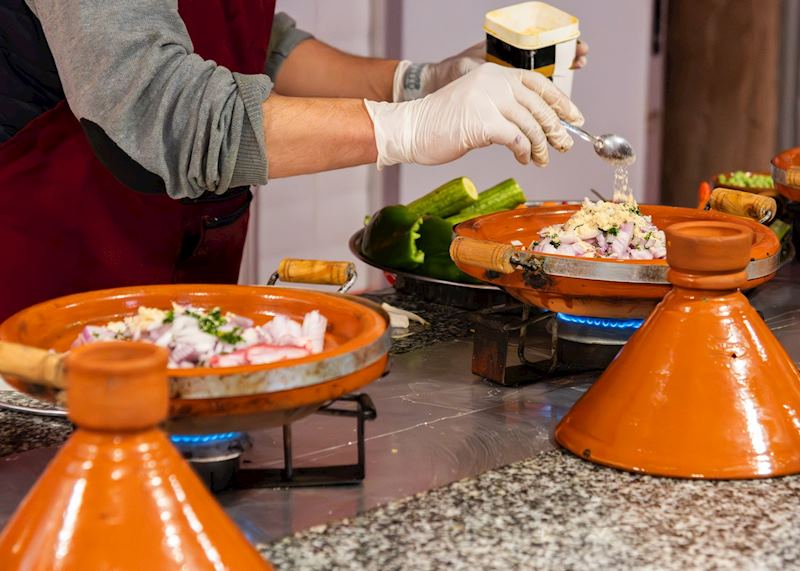
One thing Morocco’s known for is its cuisine, so there are plenty of options if you want to take a cookery course. My preferred way to learn is with a family in their home, accompanied by an interpreter who can bridge the language gap. You’ll first head to the souq together to pick up ingredients before making a spread of food, including tagine, khubz (Morocco bread), and preserved lemons.
If you’d prefer to skip the cooking and go straight to eating, I can arrange a private food tour for you instead. The street food here is quite different from that in Marrakesh, making for a nice contrast. You might try bissara, a silky dip made from pureed fava beans, served with a drizzle of olive oil and scooped up with bread. There’s also seffa medfouna, which buries buttery saffron chicken beneath a mound of vermicelli, and you’ll come across more sweet treats than you can shake a honey dipper at. My advice? Arrive hungry.
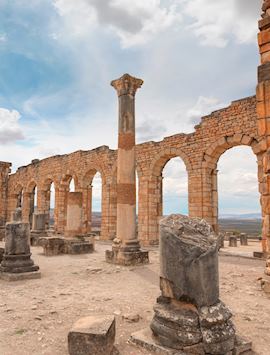
Insider’s tip: Within easy distance of the city are the Roman ruins of Volubilis, where I encountered some of the best mosaics I’ve seen outside of Rome. Your guide can uncover the myths, legends, and truths behind each tiled scene.
Is it easy to get around Morocco?
While the distances between destinations — particularly to and from the Erg Chebbi desert — can be long, driving is the best way to go from place to place in Morocco. The long journeys are made worthwhile by the ever-changing scenery. In a day’s drive, you might see snowy mountains, orange dunes, shady palm plantations, and wind-scoured limestone wadis. We’ll arrange a private car and driver for your entire trip, so you can take it all in.
How much time should I spend in Morocco?
You’ll need around ten days to see Marrakesh, Fez, and Erg Chebbi. This is mainly because it takes a day each way to drive to and from the desert, so I recommend breaking up the journey with a couple of overnight stops. For a shorter trip, a week is enough to experience Marrakesh in depth, with a night or two in the mountains. And if you’d rather see the coast than the desert, I suggest visiting the former Portuguese fishing village of Essaouira, around three hours from Marrakesh.
When should I go to Morocco?
Morocco’s main city destinations and the desert are at their best during spring (mid-March to May) or autumn (September to October), when the weather’s comfortably warm and sunny. If you plan to stay in the High Atlas Mountains, I recommend visiting in April or October to avoid the snowy months and the intense heat of summer.
Read more about trips to Morocco
Start thinking about your experience. These itineraries are simply suggestions for how you could enjoy some of the same experiences as our specialists. They're just for inspiration, because your trip will be created around your particular tastes.
View All Tours in MoroccoPlan your trip
Tell us about your plans and one of our specialists will plan a unique trip for you...
Make an enquiryRequest our brochure, The World Your Way

Order your digital copy via email.
Request a brochure