
By Peru specialist Nataly
Zingy ceviche prepared with fish caught just hours before. Andean condors soaring above llama-grazed plains. A 600-year-old citadel perched on a mountaintop, wreathed in mist and legend… I’m proud to be Peruvian, and every time I return home, I’m reminded why it tops so many travel wish lists, whether it’s our world-class cuisine, Inca heritage, or natural wonders.
For your first time in the country, I suggest a two-week trip that links up Lima, Arequipa, and Cuzco. It takes you to many of Peru’s big hitters while gradually getting you used to the increasing altitude. That way, you’ll have time to acclimatise before you reach the Incas’ crowning glory: Machu Picchu.
History, culture & cuisine in Lima
In Peru’s capital, high rises puncture the skyline in their hundreds, sprawling out to create one of South America’s largest cities. But Lima is far from homogenous. I love how each district has its own distinct feel. There’s the historic centre with its 16th-century architecture, a bohemian neighbourhood with highlighter-bright street art, and a swanky district whose clifftop promenade skirts the coast.
You won’t be able to take it all in over just a couple of days, so my advice is to focus on what interests you most. I could include a walking tour of artsy Barranco, a guided bike ride past the casonas (mansions) of Miraflores, or a visit to Huaca Pucllana, a pre-colonial pyramid dating back to 400 CE. But for me, Lima’s biggest draw is its food.
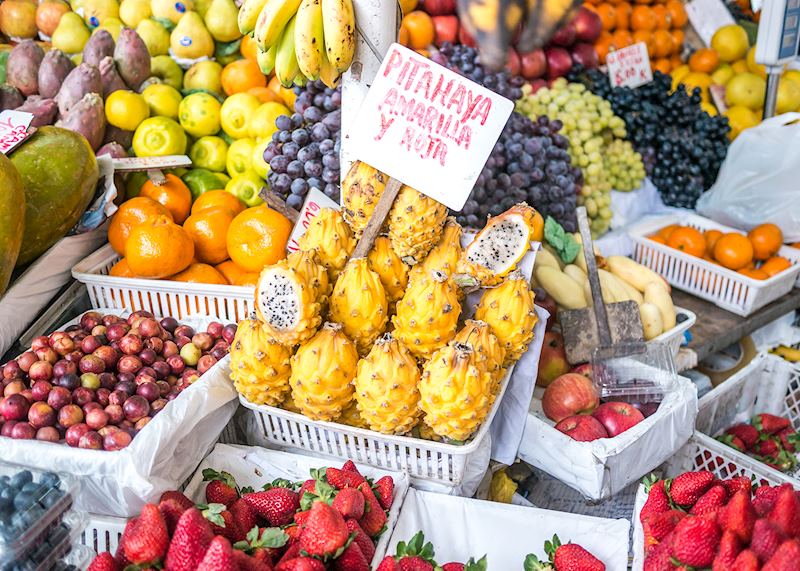
I scout out Peruvian cuisine wherever I go, but nothing satisfies my cravings like the restaurants of Lima. I’ll give you a list of the most celebrated establishments so you can book a table as soon as reservations open. But for a more down-to-earth experience, go on a culinary tour. You’ll head to a market to taste Peruvian fruits, like cherimoya (the English name, “custard apple”, perfectly captures the taste), before sampling quintessential dishes at a local haunt. I recommend citrusy-fresh ceviche and lomo saltado — tender strips of beef, served with fries.
Insider’s tip: In the 1920s, Villa Barranco was two family homes. Now, they’ve been carefully restored and converted into one of my favourite stays in the city. Each high-ceilinged room has its own personality, decorated with period furniture and artwork.
Into the mountains of Arequipa & Colca Canyon
A city hugged by the Andes, Arequipa is overlooked by a trio of volcanoes whose lava stone has given the buildings their signature white gleam. It’s one of Peru’s prettiest cities, and the pace of life here is slower than in Lima, which I find is a good antidote to the 2,332 m (7,651 ft) altitude.
My ideal day would involve a morning stroll around Santa Catalina Convent, a walled city within a city, followed by lunch at one of Arequipa’s many picantería restaurants for chupe de camarones (shrimp chowder). After a languid afternoon, I’d head to a rooftop bar in time for the city’s peachy sunset.
If that sounds like a good plan, I can arrange for you spend the morning with a guide who’ll regale you with stories of nuns, conquistadors, and stonemasons as you walk.
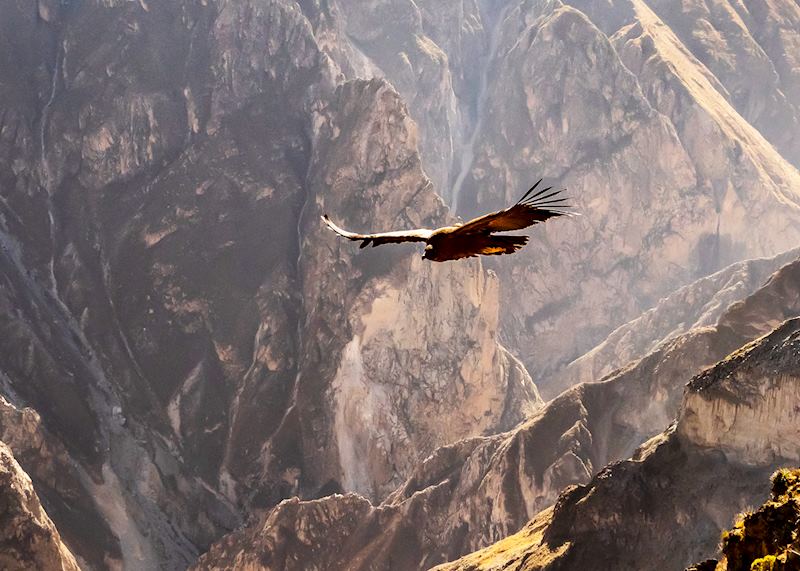
Then, it’s time to ascend to the highest point of your trip — over 4,000 m (13,123 ft). Winding along mountain roads from Arequipa, you eventually reach Colca Canyon. It’s one of the deepest in the world. You’ll have plenty of opportunity to peer down into its cavernous depths as you hike the rim, but the stars of the show fly overhead: Andean condors, which glide on thermal air currents.
Insider’s tip: Despite growing up in Peru, I still have to acclimatise to high altitudes. I’ve found that eating light, non-greasy food like soup and avoiding alcohol helps me to adjust more quickly.
A boat ride around the islands of Lake Titicaca
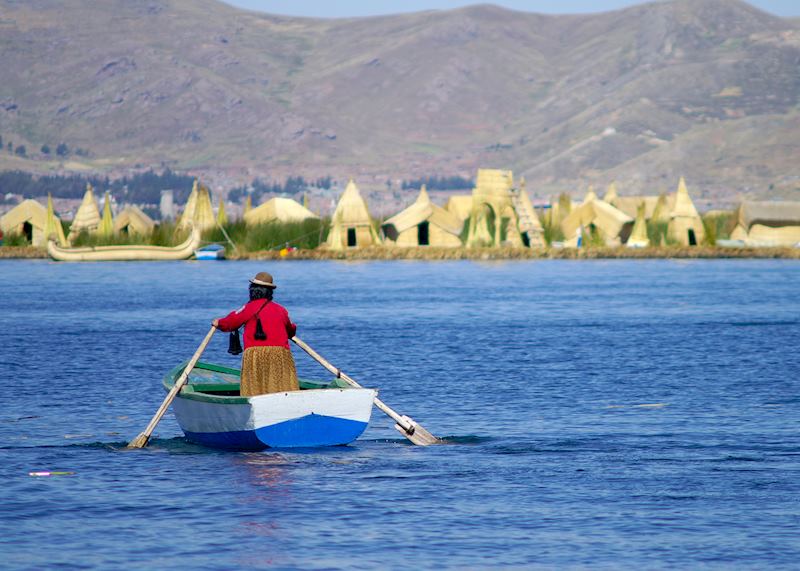
Straddling Peru and Bolivia, Lake Titicaca is the highest navigable lake in the world. But it’s better known for something else: the 100-or-so islands that float on its surface. Constructed out of totora reeds plucked from shallow waters, the islands are inhabited by Uros communities who have lived there for centuries.
Nowadays, some islands have more of a commercial feel, where residents lean into tradition for the sake of visitors. But I’ll make sure you experience the lake’s authentic character by pairing you with a guide who’ll take you to the quieter parts. As you cruise, you might see women harvesting reeds in full skirts and wide-brimmed hats, or a totora boat gliding across the water, its distinctive banana-like prows curving upwards.
About an hour and a half away by boat, Taquile Island isn’t a floating island, but a literal one. Far fewer visitors make the trip, so it’s much quieter than the Uros islands. Together with your guide, you’ll meander past terraces used to grow potatoes, beans, and quinoa, which you can later taste during an alfresco lunch. Taquile also has a UNESCO-protected textile heritage. Unlike elsewhere in Peru, it’s the men who knit here, and you’ll be invited to watch their nimble hands at work as they create brightly patterned handicrafts.
Insider’s tip: For a quality keepsake, buy a chumpi (calendar belt), chullo (hat), or blanket from the artisans on Taquile Island.
An introduction to the Incas in Cuzco & the Sacred Valley
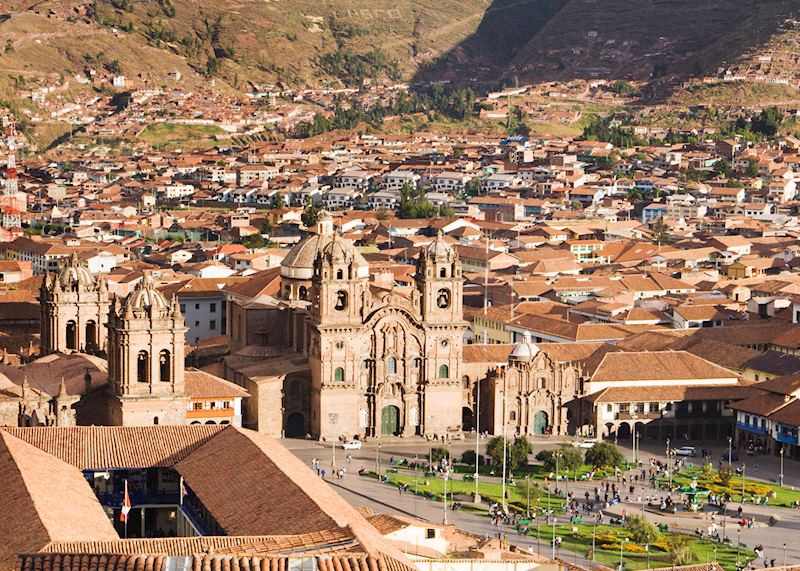
The former Inca capital of Cuzco is layered in history — literally. Its conquistador-era buildings sit on Inca foundations. With cobbled backstreets and an eclectic mix of museums, I think it’s best explored on foot with a local. They’ll reveal hints of the Inca Empire that peek out from colonial construction, like the cathedral off the central Plaza de Armas. It was built with granite plundered from Sacsayhuaman, a nearby fortress where you can still see human-sized stones slotted together with baffling precision.
Cuzco is also your gateway to the Sacred Valley. The heart of the Inca Empire, the valley is scattered with ruins, like Písac and Moray, which are known for their clever agricultural terracing. My guide told me how each layer has its own microclimate suited to cultivating different crops.
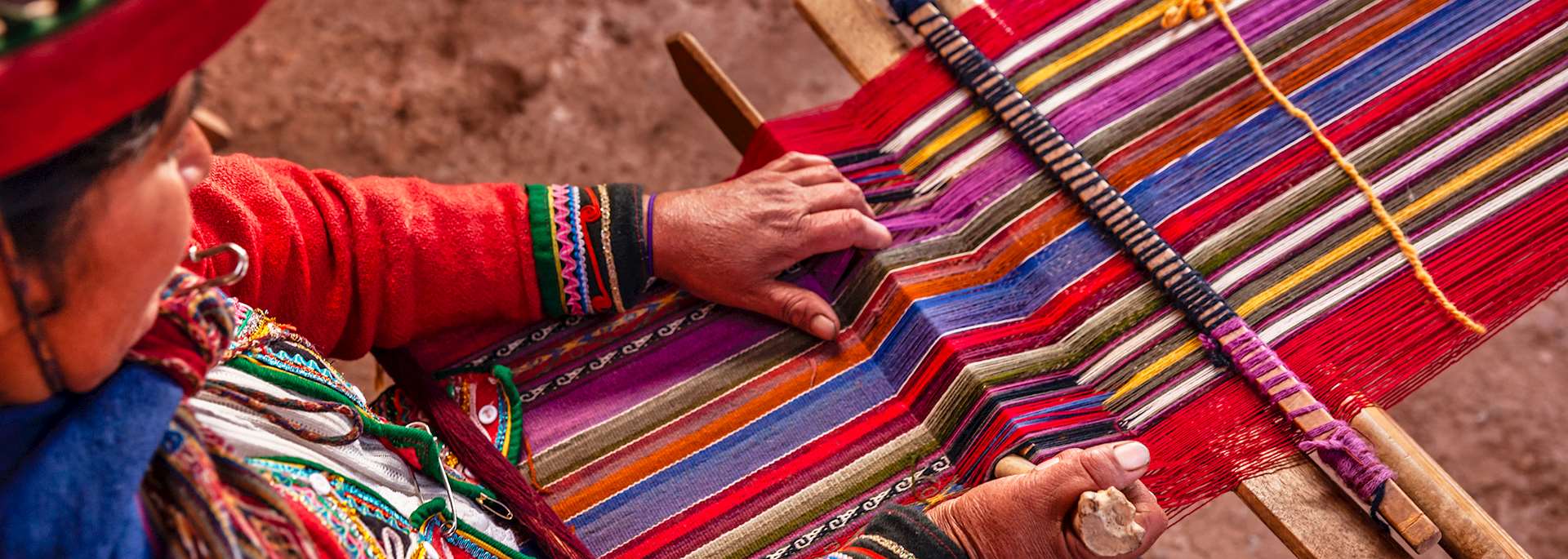
Also dotted around the valley are Quechua-speaking weaving villages. Vocabulary sheet in hand, you can introduce yourself to a group of weavers and try making a bracelet threaded with the bright patterns that have become synonymous with Peru.
Insider’s tip: For me, Hotel Sol y Luna is the best in the country. Nestled in the Sacred Valley, it’s a peaceful retreat, where you sleep in a private stone casita decorated with hand-loomed textiles and a custom mural inspired by the Andes.
Welcome to Peru’s crown jewel: Machu Picchu
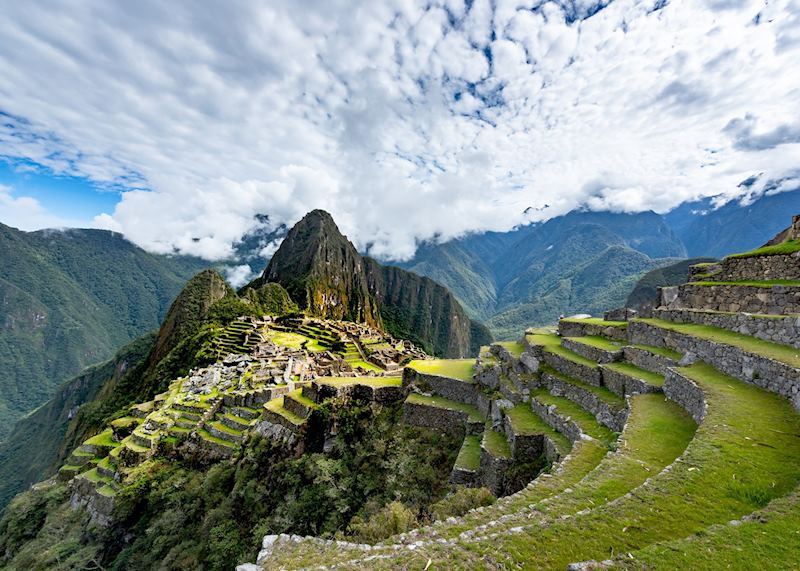
The pinnacle of any first-time trip to Peru, Machu Picchu looks like it’s suspended among the clouds — a cluster of 600-year-old granite ruins that appears to rise out of the surrounding mountains. I’m always struck by its tangible spiritual energy.
There are various ways to reach Machu Picchu, all of which can be boiled down to one question: do you want to hike? You could follow the classic trail on a multi-day pilgrimage the Incas took themselves, or simply complete the last (relentlessly uphill) six miles to the Sun Gate, which watches over the ruins from above. Alternatively, walk the less-trodden Salkantay route, staying in luxury mountain lodges each night. Or, if hiking doesn’t appeal, you can get the bus up to the main entrance instead.
No matter which option you go for, you’ll get to experience the citadel in all its glory. As you wander among the skeletons of lodgings, temples, tombs, and fortifications with an expert guide, you’ll find yourself lingering on details that catch your eye to piece together how (and why) the Incas pulled off such a feat.
Insider’s tip: Any visit to Machu Picchu should be planned well in advance. Tickets are limited, and some access types — like the one that gives you the postcard view of the citadel — sell out far in advance. I’ll help you choose the right ticket type for you and purchase it ahead of your trip.
Is it easy to get around Peru?
With regular domestic flights and private drivers on hand, getting around Peru is simple. I’ll arrange everything for you so that your whole trip runs smoothly. It’s best to fly between Lima and Arequipa, for example, but other journeys are doable by car. Or for a change of pace, you could ride the Belmond Andean Explorer on a scenic train journey that ends in Cuzco.
How much time should I spend in Peru?
I suggest around two weeks to take in Peru’s highlights, including Lima, Arequipa, Lake Titicaca, and Machu Picchu. That will give you enough time to spend at least a couple of days in each place and explore at a steady pace. You’ll need more time if you want to hike to Machu Picchu, which can take anywhere between one and seven days, depending on which trail you follow. Similarly, you might like to extend your trip by a few days to include the Amazon, too.
When should I go to Peru?
For warm, sunny days in the Andes and views of Machu Picchu against blue skies, I like May best. It’s the start of Peru’s dry season, but early enough that crowds aren’t at their peak (June to September). If you don’t mind a little rain, April is quieter, and the mountains are at their greenest. Expect it to be a little cloudy in Lima, though.
Read more about trips to Peru
Start thinking about your experience. These itineraries are simply suggestions for how you could enjoy some of the same experiences as our specialists. They're just for inspiration, because your trip will be created around your particular tastes.
View All Tours in PeruPlan your trip
Tell us about your plans and one of our specialists will plan a unique trip for you...
Make an enquiryRequest our brochure, The World Your Way

Order your digital copy via email.
Request a brochure